Silicone surface finishing

After molding, silicone can take several surface treatments that change feel, appearance, adhesion, wear resistance, dust pickup, printability and bonding performance. We match the route to the application, the reliability standard and the cost target, and keep the overmold interface stable at the same time.

Surface finish is part of the plan, not the last step

The same silicone part can be mirror polished, matte or textured for grip, and the difference in feel and appearance is obvious. Whether it is coated, which oil is used and where graphics are printed directly affect wear behaviour and service life.

Most surface problems are not caused by whether a treatment is done at all, but by the order: whether activation happens before coating, where graphics sit, and whether a post-treatment touches the bonding interface. That is why finishing is assessed inside the overall plan — drawing on our experience with silicone over electronics, and selecting the process combination to the application, the reliability standard and the cost target.

The routes below describe general process directions. Which route applies to a specific product, and whether routes are combined, is confirmed after reviewing structure, operating environment and appearance standard.
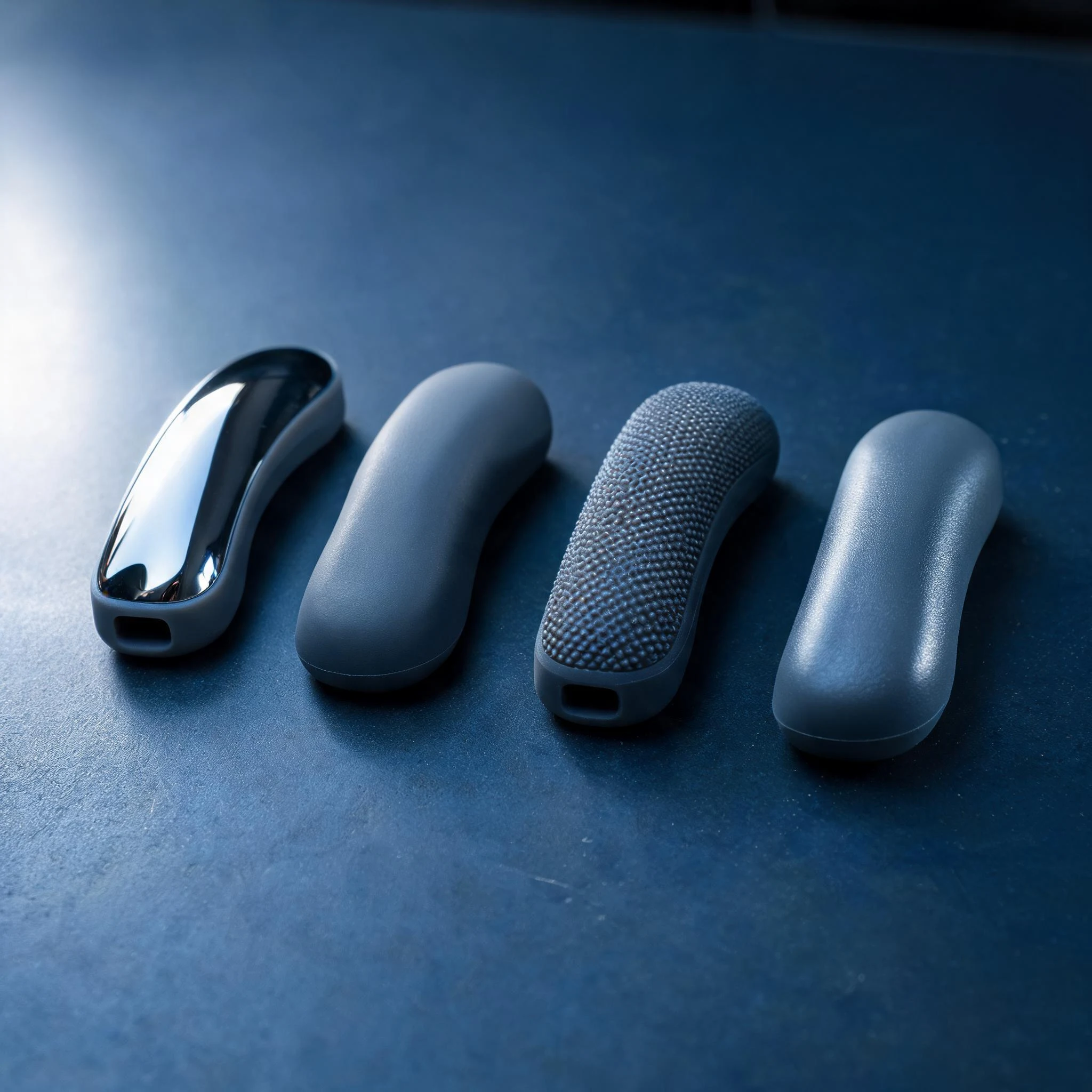
Silicone parts with different textures and surface finishes
The same silicone grip part can be mirror, matte, textured or coated for a smooth feel — the difference in hand feel is significant.

Available routes

Eight silicone surface finishing routes

They can be used alone or combined as the product requires; when combined, the order directly affects the result and the reliability.

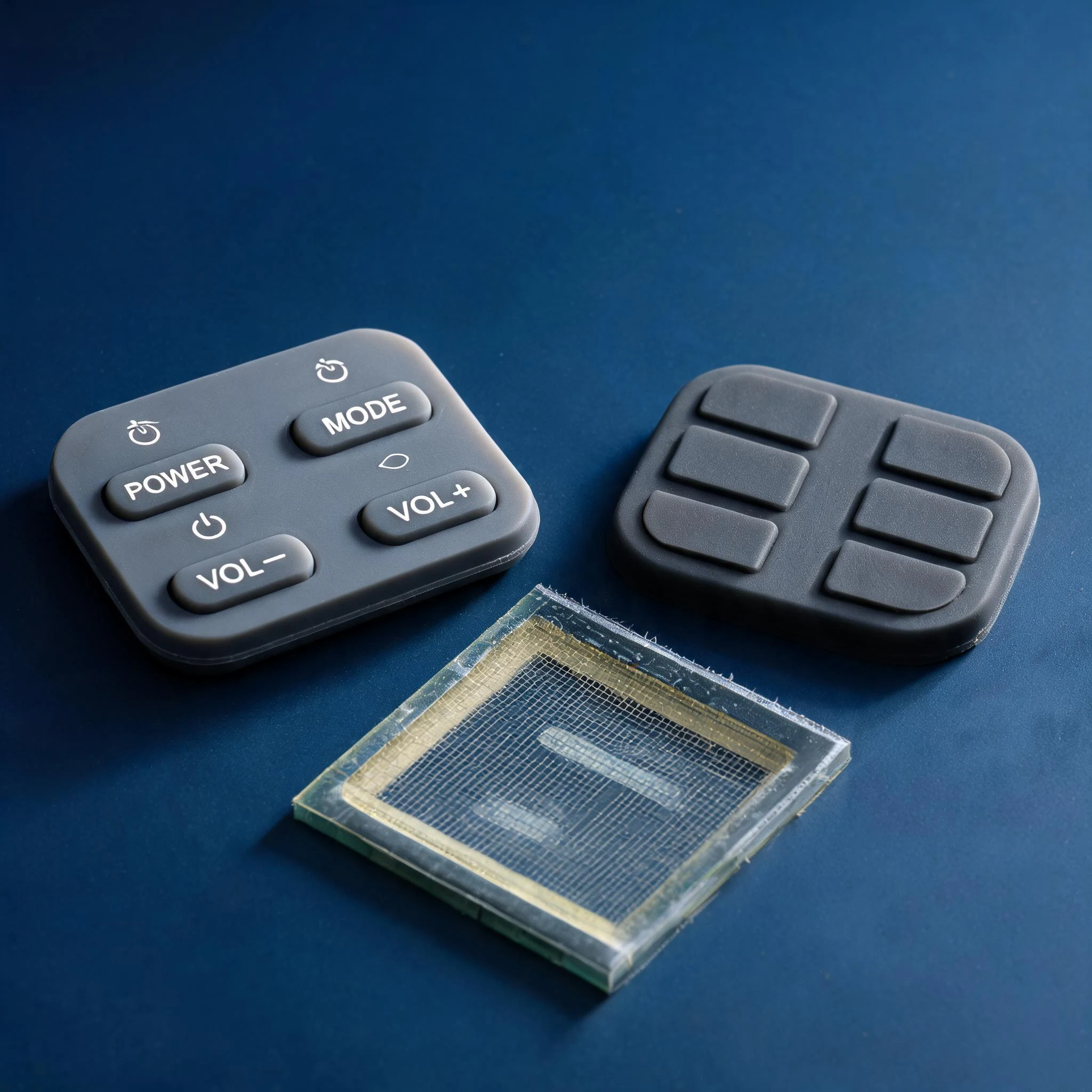
Screen printed and laser engraved graphics on a silicone panel
Screen printing, pad printing and laser marking answer different wear and detail requirements, and coating is usually preceded by surface activation.
Mold Texture

Mold texture (etching and polishing)

Mirror, matte, grained or anti-slip texture is built into the mold, produced in one molding cycle with no secondary operation.

  • Wear-stable, with no coating that can flake off
  • Consistency comes from the mold and holds across the batch
  • Suits handles, seals and anti-slip grips
Coating

Spray coating (feel oil and coloured PU)

Feel oil gives a smooth, fine touch, reduces static and dust pickup and removes the raw tacky feel of silicone — common on wearables and keys. Coloured PU coating allows Pantone colour matching in matte, semi-matte or gloss, and improves wear, sweat and ageing resistance.

  • Silicone has low surface energy, so plasma activation can be paired before coating to secure adhesion
  • The target is no paint loss after bending and long-term abrasion
  • Colour is checked against a physical sample at the sampling stage
Plasma

Plasma surface activation

A dry, environmentally clean surface modification that raises the surface energy of silicone and greatly improves the adhesion of inks, coatings and adhesives.

  • Used as pre-treatment before coating and printing
  • Also used to pre-treat metal, PCBA and plastic inserts before overmolding, improving the bond between silicone and substrate
  • Common on medical parts and high-end electronic parts
Nano Bonding

Nano bonding

Nano-scale surface modification builds a micro-mechanical interlock at the interface between silicone and the insert (metal, plastic or PCBA), giving a high-strength composite without a primer.

  • Aimed at the delamination and debonding that conventional overmolding suffers
  • Stronger water resistance, temperature resistance and ageing performance
  • Suits high-reliability silicone and electronic composite parts
Printing

Screen printing, pad printing and in-mold transfer

Logos, characters, graphics and scales printed on the silicone surface for identification and decorative appearance.

  • Screen and pad printing: with plasma pre-treatment the ink holds better and does not rub off under long-term abrasion
  • In-mold transfer: the graphic is heat-transferred and bonded in one step during cure, so ink and substrate become one, with very strong adhesion
  • A typical case is a silicone swim cap which stretches to 1:7 while the graphic keeps its shape, does not crack and does not peel after repeated pulling
Laser

Laser engraving and laser colour change

Two laser routes work in different ways and suit different marking needs.

  • Conventional laser engraving: engraving the surface, or laser-through marking after coating, gives permanent characters and graphics and can make backlit keys; common on smart hardware and control panels
  • Laser colour change: no damage to the part structure — laser energy alters additives inside the silicone so the irradiated area changes colour
  • Colour change produces no dust and no coating loss, and is fine enough for marking precision small electronic components
Flocking

Flocking

Short fibres applied to the silicone surface to give a flocked, soft touch.

  • Anti-slip and quiet
  • Mostly used on wearables and precision buffer parts
Post Cure

Post curing (post bake)

Removes small-molecule volatiles from the silicone, reducing odour and migration while improving heat resistance and ageing performance.

  • Standard for food-grade and medical-grade products
  • Also suits wearables where odour and cleanliness matter

Other options include corona treatment, local primer activation, grinding and polishing. The combination and sequence are confirmed after assessing the product requirements.

Why YHIOT

From insert pre-treatment to downstream finishing, assessed as one line

Many silicone factories can only run a single coating or printing step. We assess the whole process chain of a composite part together, so failures such as coating loss, worn characters and overmold delamination are designed out early.

  1. 01

    Overmold insert pre-treatment

    Cleaning and activation are chosen to suit the metal, plastic or PCBA substrate, preparing the interface for the bond that follows.

  2. 02

    Nano bonding composite molding

    A micro-mechanical interlock is built at the interface, reducing reliance on primer and raising composite strength and reliability.

  3. 03

    Silicone molding

    The molding route follows structure and volume, with mold texture, hardness and colour handled in the same step.

  4. 04

    Downstream finishing

    Plasma activation, coating, printing, laser, flocking and post curing are combined as required, balancing appearance and durability.

FAQ

Surface finishing questions

Why is plasma activation needed before coating?

Silicone has low surface energy, so coatings and inks do not adhere easily. Plasma activation is a dry form of surface modification that raises the surface energy of silicone, which improves coating adhesion and reduces the risk of paint loss after bending.

How is nano bonding different from a primer?

A primer adds a layer of bonding medium at the interface; nano bonding builds a micro-mechanical interlock between the silicone and the insert and achieves a high-strength composite without relying on primer. It is used to solve the delamination and debonding that conventional overmolding suffers.

In-mold transfer or screen and pad printing?

Screen and pad printing are applied after molding, and with plasma pre-treatment the ink holds up better; they suit logos, characters and scales. In-mold transfer bonds the graphic in one heat-transfer step during cure, so ink and substrate become one — adhesion is stronger and it suits graphics that must stretch far or face long-term abrasion.

Why do food-grade and medical products need post curing?

Post curing removes small-molecule volatiles from the silicone, reducing odour and migration while improving heat resistance and ageing performance, so this post-treatment is normally scheduled for such products.

What is the difference between laser engraving and laser colour change?

Conventional laser engraving cuts the surface layer, or engraves through a coated part to make backlit keys. Laser colour change does not damage the part structure: laser energy alters additives inside the silicone so the irradiated area changes colour, with no dust and no coating loss, which suits marking on precision small electronic components.

Does surface finishing affect the stability of an overmolded structure?

Overmold structure and surface result are assessed together. Treatments that involve the bonding interface, such as insert pre-treatment and nano bonding, exist to raise composite strength; downstream processes such as coating and printing must avoid the load-bearing area of the interface so that no hidden weakness is left.

Need a defined surface finish?

Tell us the feel and appearance target, the abrasion or sweat resistance required and whether printed identification is needed, and we will recommend the process combination and how to verify it.

Send process requirements