Metal insert overmolding
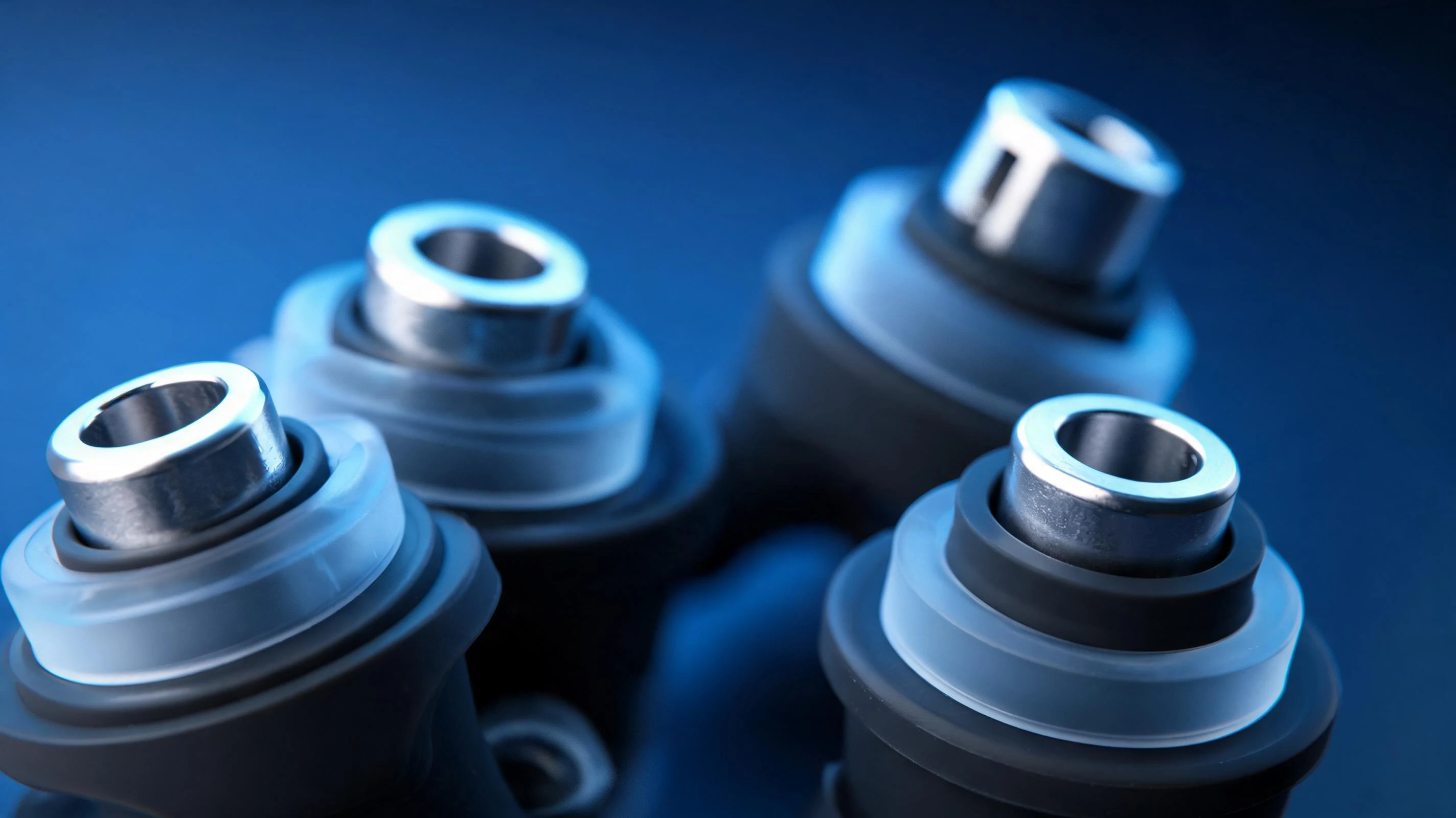
Metal inserts and silicone are molded together in one cycle to form covering, fixing and sealing faces, suited to parts that need threaded holes, locating posts or structural support.
Precision silicone overmolding manufacturer
Silicone bonded to metal, plastic and PCBA assemblies in one molding cycle. Send drawings or samples and we assess structure and material first, verify by sampling, then run production.
What we take on
The difficulty in an overmolded part is rarely the silicone itself; it is the structure and process fit at the boundary between two materials. Every direction below is assessed item by item from drawings or samples, taking into account the constraints of the neighbouring processes in electronics, batteries, electromagnetics, plastics and metal hardware.
Metal inserts and silicone are molded together in one cycle to form covering, fixing and sealing faces, suited to parts that need threaded holes, locating posts or structural support.
The rigid plastic carries structure and assembly while silicone provides sealing, cushioning and touch, as in keys, sleeves and clips. Material compatibility is the main assessment point.
Circuit board and silicone molded as one for waterproofing, dust protection or cushioning. Gate position and tool structure must clear the component layout.
Sealing rings, gaskets and profiled structural parts. Hardness, colour and dimensional tolerance are confirmed against the operating environment before tooling and process are set.
Capability system
An overmolded part works only when five things hold at once: the right compound, surface treatment that lasts, tooling matched to the molding method, a bond at the dissimilar interface that holds, and performance that passes verification. Each direction is assessed in the capability review.
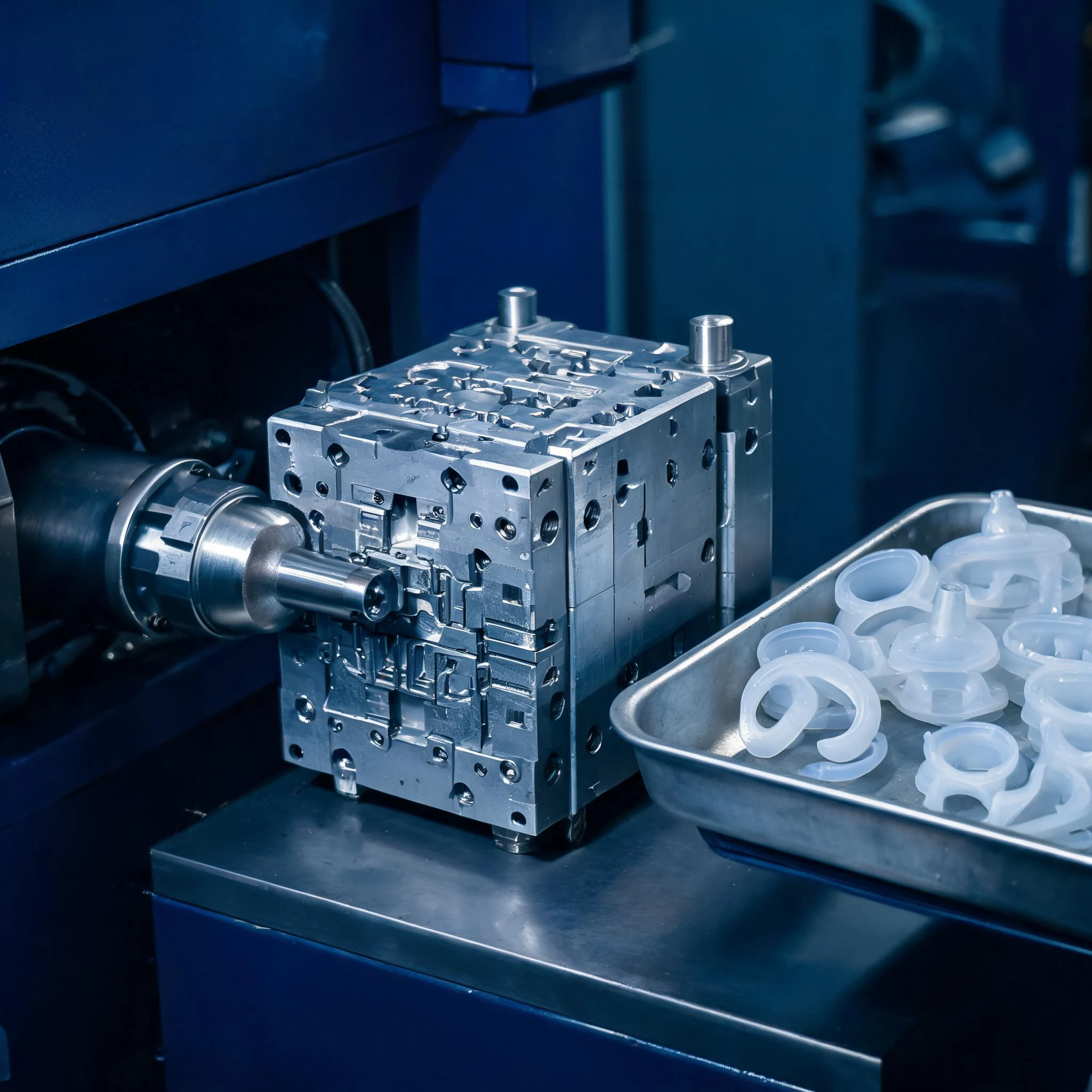
Assessment priorities for four overmold structures, how material and molding method are chosen, and where to look when defects appear.
High rebound, tear resistance, temperature resistance, flame retardancy, anti-static, food-contact and medical grades, with Shore A 0 to 90 selectable.
In-mold texture, coating and plasma activation, screen and pad printing, in-mold transfer, laser marking, flocking and post-curing, combined as required.
Nine molding routes with four tool systems, plus single-colour, multi-colour and combined-bonding options.
Ultrasonic cleaning, plasma activation, substrate-matched primer and temperature-controlled press curing, aimed at delamination and cracking.
Six testing groups: composition and formula analysis, mechanical and bond strength, weathering, electrical insulation, wear life and precision dimension.
Project flow
Each step closes on confirmed items, so nothing unresolved is carried into tooling or production. If there is only an idea and no drawing yet, the project starts with requirement review.
Clarify operating environment, assembly method, appearance and volume requirements, and collect drawings or samples.
Judge overmolding feasibility and risk points and recommend a structure and material direction.
Confirm silicone hardness, colour, coverage range and the direction of the tool structure.
Small-batch samples with trial assembly and checks on dimensions and appearance.
Molding to the frozen process window, inspected and shipped to the agreed standard.
FAQ
Metal parts, plastic parts and PCBA assemblies can all serve as the substrate. The option is confirmed after reviewing part structure, operating environment and assembly method — the interface structure and insert surface condition usually matter more than the material itself.
A 3D drawing or a physical sample, plus the operating environment, assembly method and appearance requirements. With a sample only, we confirm the structure first and then the material and tooling.
Requirement review and drawing assessment, structure and material confirmation, tooling plan, sampling verification, then volume production, inspection and delivery. The schedule is quoted after assessing structural complexity and tooling status.
Yes. A small trial batch can be arranged to verify assembly and reliability before scaling up.
Send the part structure, operating environment and assembly requirements. We confirm feasibility and risk points first, then agree on tooling and sampling.