Precision silicone overmolding · drawing review → sampling → volume

Senior technical roles behind demanding silicone work

Hard composite parts come down to people in the end: how a compound is adjusted, how a tool is changed, how parameters are set, and where someone starts when a part fails. The technical roles are configured by capability, and hiring keeps to a higher standard than an ordinary factory.

No generalist staffing on technical roles

In silicone overmolded onto metal, plastic or PCBA, one problem usually touches several stages: a compound that is not good enough, a tool structure that is wrong, parameters that do not match, or a surface process that fights the part design. If every stage is covered by general experience, the problem is simply pushed to volume production.

Our staffing approach is a high entry bar, above-market pay and real technical authority: core roles go to engineers who can develop, troubleshoot and optimise independently. The aim is stable technical judgement and stable quality, not trial and error on a new line.

That is also why the team is the visible evidence behind the technical claims: difficult silicone and electronics composites, special compounds, process recovery on troubled projects and demanding volume programmes.

The roles below stay open and are screened continuously. Suitable engineers can apply through the details at the bottom of this page.
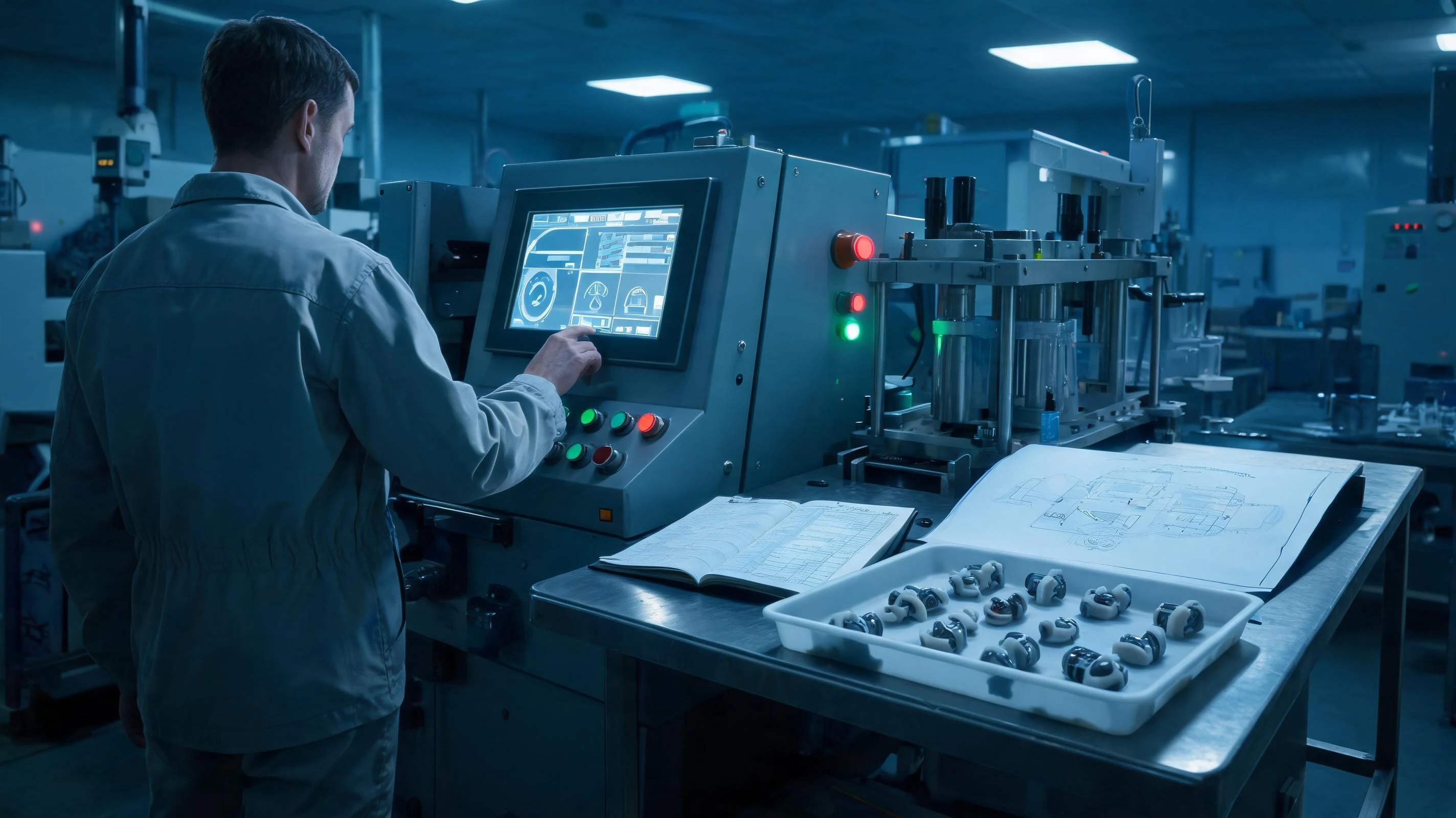
Process engineer adjusting parameters and checking samples
Process trials, sample inspection and parameter records are what fix a volume process window.

Role structure

Six core technical roles

Materials, tooling, process, structure, quality and surface finishing make one closed technical loop.

01 · Materials

Silicone compound development engineer

What the role needs

  • Fluent in compounding both solid silicone and liquid LSR
  • Experience with high tear strength, wide temperature range, flame retardant, food-contact, medical-grade and anti-static compounds
  • Modification work, milled compound and colour compound development, able to solve material fit and performance shortfalls independently
  • Experience with silicone compounds for electronics composites is an advantage

Why it matters: the role owns custom compound development, new material iterations and material plans for unusual duty conditions — the technical source of a product's core performance.

02 · Tooling

Silicone tool design and precision toolmaking engineer

What the role needs

  • Tool structure design across aluminium, copper and steel silicone moulds
  • Development experience with compression, injection and potting tools
  • Precision overmold tool structures, able to solve delamination, short shots, distortion and heavy flash on metal, plastic and PCBA inserts
  • Experience optimising high-end precision tools for volume

Why it matters: tool accuracy and molding stability decide whether defects appear at all, and therefore the yield of a demanding custom part.

03 · Process

Senior silicone process engineer

What the role needs

  • All silicone molding routes, surface processes and dissimilar-material bonding processes
  • Parameter work on plasma activation, primer treatment, nano bonding and in-mould transfer
  • Able to solve difficult volume problems independently
  • Able to run on-site technical support and process recovery at another factory

Why it matters: the role takes new parts into production, optimises the volume window, resolves difficult projects and provides process support outside the company.

04 · Structure

Silicone product structure engineer

What the role needs

  • Structure design for irregular silicone shapes, multi-colour parts and composite overmolds
  • Understanding of how silicone joins to metal, plastic and electronic components
  • Tooling and molding knowledge, so design, process and volume stay connected
  • Able to avoid problems caused by design and process drifting apart

Why it matters: structure and manufacturability are aligned before tooling, which removes structural rework after the tool is cut.

05 · Quality

Quality and reliability engineer

What the role needs

  • Full-range silicone test standards: composition analysis, mechanical properties, environmental ageing, electrical insulation and service life
  • Confident operation of precision test equipment
  • Able to build a reliability verification plan from scratch
  • Able to host customer audits and product compliance certification

Why it matters: the role turns long-term behaviour into data and sets the acceptance criteria for volume. Test capability is described under R&D and testing.

06 · Finishing

Senior surface finishing technician

What the role needs

  • Spray coating, screen printing, pad printing, laser colour marking, in-mould transfer, flocking and post-curing
  • Able to solve coating peel, cracked graphics, stretch distortion and poor hand feel
  • Comfortable with the appearance and performance standard of premium products

Why it matters: the role decides how the part looks and how long that look lasts. Process scope is under surface finishing.

How to apply

All six roles are open year-round. Profiles go into the technical talent pool and a technical interview is arranged when a matching project or role comes up.

  • Email: 980689806@qq.com
  • Telephone: +86 13215335550
  • Location: Building 12, No. 105, 221 Jiaoyu Road, Dalingshan Town, Dongguan, Guangdong, China
  • Or send it through the contact page and mark the enquiry as a technical application

Screening order

  1. Profile review

    Technical direction, years of experience and project types checked against the role.

  2. Technical interview

    Discussion around real product types, process difficulties and how you approached them.

  3. Practical assessment

    A hands-on task or case analysis in process, tooling or compounding, depending on the role.

Hiring standard

Why the entry bar is set high

The bar is not there to filter people out; it is there so a customer gets a predictable result.

Pay above the industry level

Core technical roles are paid ahead of ordinary factories in this industry, which is what brings experienced engineers in and keeps every technical decision at a high level.

The bar is about solving problems

Core roles are not staffed with generalists. They go to engineers who develop, troubleshoot and optimise independently, with experience in demanding silicone customisation and difficult process recovery.

The team carries the business

Difficult silicone and electronics composites, special compounds, process recovery and premium volume programmes are taken on directly — the most concrete evidence of technical capability.

Common questions

About the roles and applying

Are the technical roles always open?

Yes. The six core roles stay open and are screened continuously. Profiles go into a technical talent pool and a technical interview is arranged when a matching project or role comes up.

Do you take graduates or people from outside the silicone industry?

The core roles are filled by experienced engineers who can develop, troubleshoot and optimise on their own. Candidates from outside silicone but with materials, tooling or electronics assembly experience are welcome to apply; transferable ability is assessed against the role.

Where are these roles based?

At the factory in Dalingshan Town, Dongguan, Guangdong. Some technical service projects need on-site work at a customer plant for machine trials or temporary support.

What should an application include?

A CV plus material that shows what you have worked on: product types, the processes you owned, problems you solved, or photos of parts you are allowed to share. Nothing confidential is needed, and no drawings.

How is pay decided?

Core technical roles are paid above the ordinary factory level in this industry. The figure is set from technical ability, project experience and the responsibility the role carries, and discussed at the technical interview.

A difficult project that needs a technical review?

Send the part structure, the operating environment and where it is currently stuck. The engineer for that direction makes the first call, then a plan follows.

Send a project brief