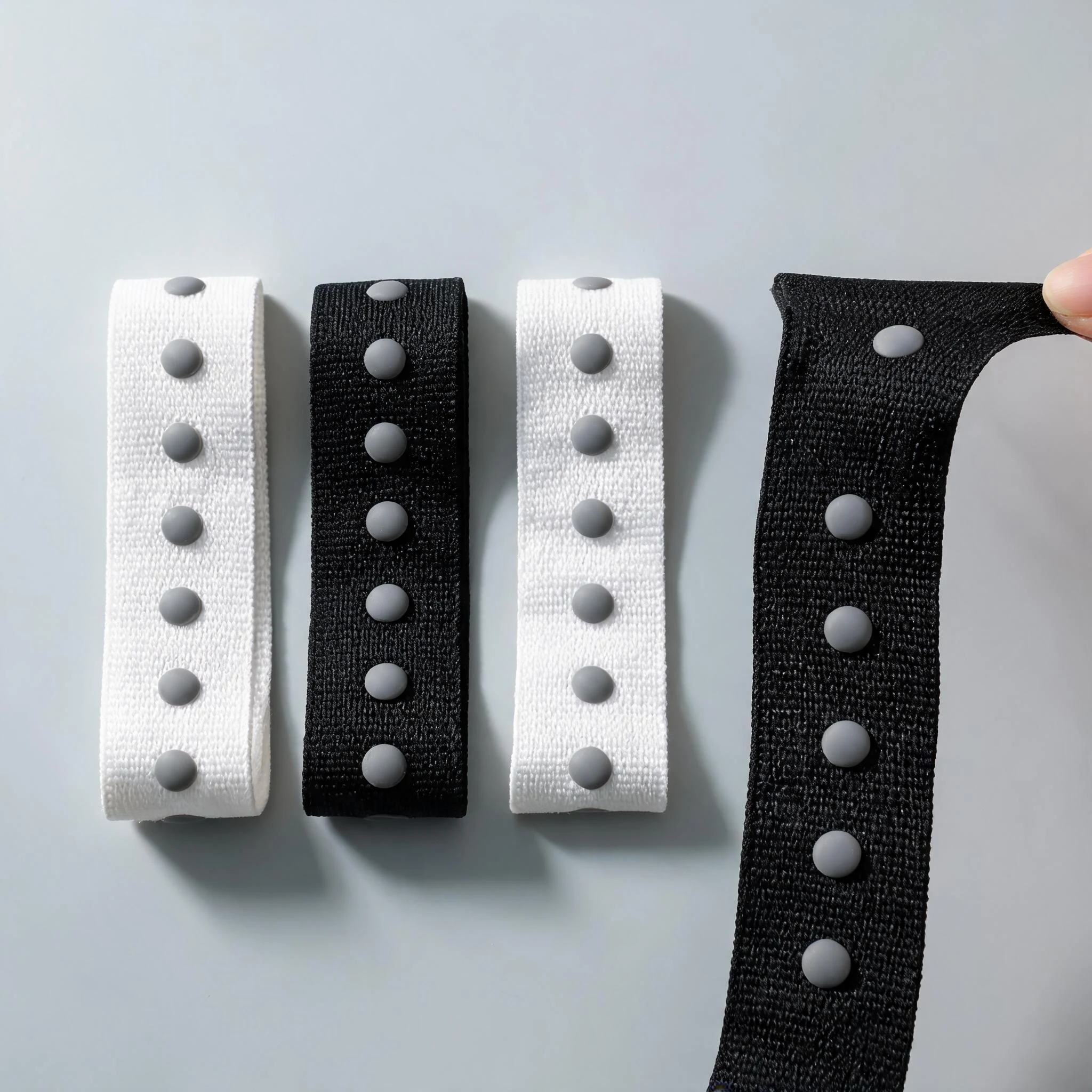
Dots on elastic appear on support straps, sock cuffs, waistbands and bag straps. The difference from flat fabric is simple: the dots are printed flat but work stretched.
A uniform array opens up when worn, each dot flattens, and grip falls off. The pattern has to be derived from the working elongation, not copied from a flat layout.
1. Measure the working elongation first
Measure the elastic from relaxed to worn length. Pre-compensate the pitch by that ratio so the density under tension matches the design. Running two pitch variants on real or simulated parts is the quickest way to choose.
2. Bars hold better than round dots
On parts that stretch, bars running along the stretch direction stay in contact instead of opening gaps between dots. The cost is that bar edges lift more easily, so edge cure and cutting quality need separate control.
3. Film route for factories without printing
If the printing line is not yours, order the dots as hot-melt film: printed on TPU or nylon, shipped as a roll, cut to length and pressed onto the elastic at the garment factory. That also avoids stretching the elastic under printing tension.
Conclusion
Dots on elastic only work in the working state. Measure elongation, set pre-compensation and pattern, then verify under real wear and washing.
Related: process routes, grip parameters, wash testing, and the product page.