Outdoor searchlight tail grip sleeve
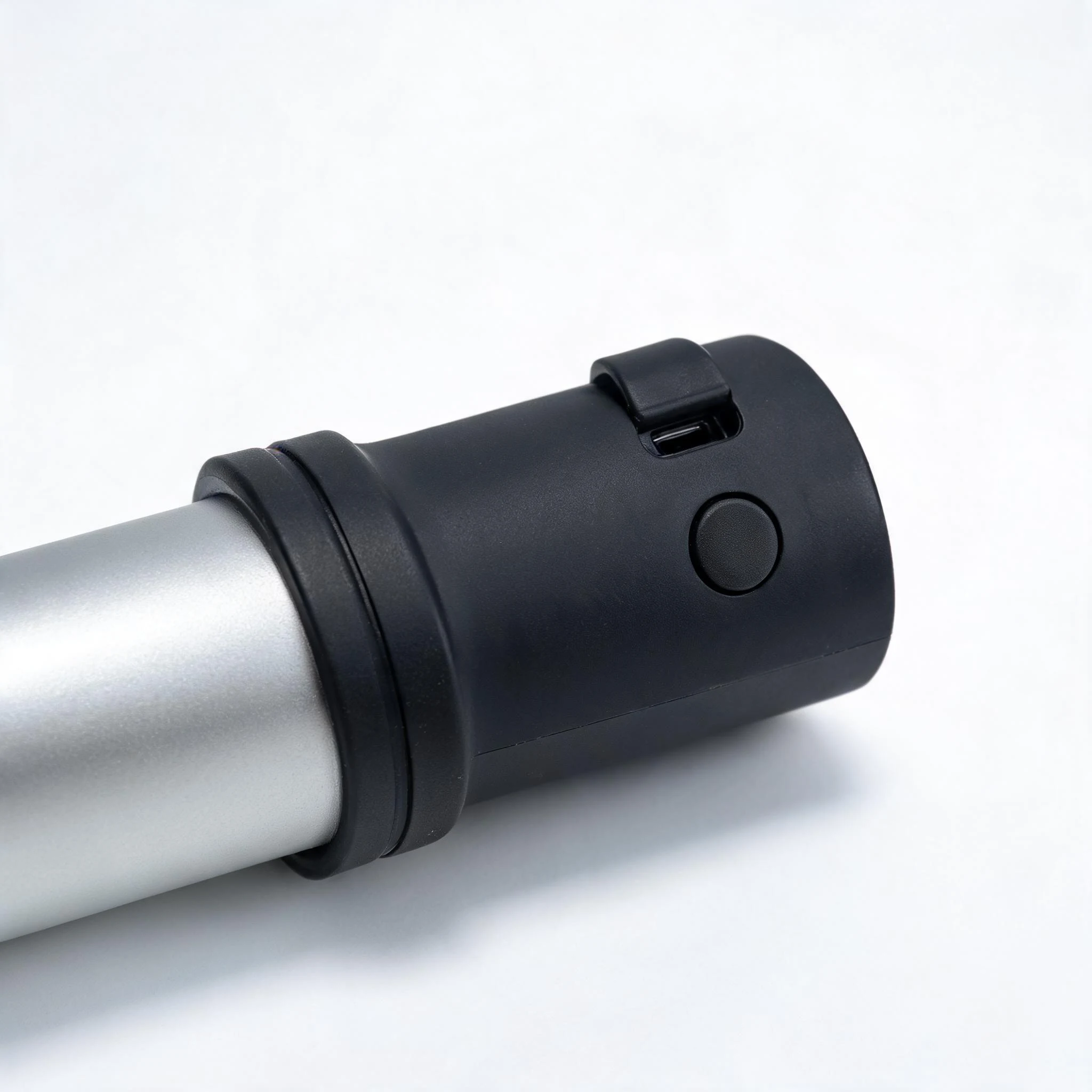
A silicone sleeve overmoulded onto the aluminium housing and copper terminals: grip that holds in rain, sweat and gloves, a lip and spigot that keep water out, and no hardening in the cold.
Product description
The tail of a searchlight or work light is the section a hand holds longest - and the section most likely to take on water. The charge port, power button, cable exit and terminals all crowd into the same few centimetres. A plastic tail cap goes slick with sweat or rain, worse with gloves; a metal cap is cold, slick and hard on the hand in winter. A tail grip sleeve wraps the whole section, replaces the grip surface with a high-friction soft one, and uses a lip and spigot to keep water out.
There are two structural routes for a searchlight tail grip sleeve. A slide-on sleeve is a separate silicone part held on the aluminium barrel by interference fit: it can be removed for cleaning or replacement, the tool is cheaper and colours can change, which suits an accessory for an existing light. Overmoulding forms the silicone directly on the housing, with mechanical locking and primer at the interface: sealing is more complete and the sleeve cannot be pulled off, which suits a new model. Whether serviceability has to be kept is the first fork in the choice.
The copper terminals are the critical point. They must stay exposed to conduct, yet water must not creep along their roots into the lamp cavity. The usual route fixes the terminals first, then overmoulds: a ring-shaped boss and groove at each root lets the silicone form a compressed seal. Primer is only a support, because copper oxidises quickly - nickel-plated copper is far more stable than bare copper.
Temperature cuts both ways: the tail collects heat while the lamp runs, and outdoor winter use freezes it. Silicone stays elastic near -40 C, so a cold sleeve does not feel hard in the hand. Leave a heat break between the sleeve and the head, and confirm the compound separately for any section that sits against hot aluminium rather than wrapping the whole light in one grade.
Structure and material points
- Coverage: wrap only the area the palm actually contacts, stopping short of the cooling section and fins.
- Aluminium surface: confirm anodising thickness and sealing state; a thick or poorly sealed film gives the primer nothing to grip.
- Copper terminals: nickel-plated copper first, with a boss and groove at the root so silicone compresses into a seal.
- Spigot and lip: design 15-30% lip compression, thicker at corners so the lip does not roll during assembly.
- Texture: fine grit, diamond or longitudinal grooves; measure friction wet and gloved on the sample.
- Temperature: no embrittlement at -40 C; keep a heat break near the head and confirm long-term hot sections by grade.
Options
Range and process rules
Typical range for this product family. Dimensions, tolerances and acceptance criteria follow the drawing; grip feel and assembly force are approved on a physical sample.
| Item | Range | How it is fixed |
|---|---|---|
| Light fit | Tail of searchlights, work lights and head torches with a 30-80 mm barrel, custom to the tail thread or bayonet | Light drawing or a physical sample |
| Construction | Slide-on sleeve or overmoulded in place | Serviceability versus sealing requirement |
| Wall thickness | 1.5-4 mm, locally thicker at the grip | Grip and assembly force on samples |
| Hardness | Shore A 30-60, typically 40-55 at the grip | Approved on a physical sample |
| Surface | Fine grit, diamond, longitudinal grooves, gloss | Wet and gloved friction measured on samples |
| Colour | Black standard; colour matching or glow and fluorescent marking | Colour plaque and sample approval |
| Terminals | Nickel-plated copper overmoulded, or terminal apertures fitted afterwards | Electrical connection method |
| Sealing | Spigot plus lip, optional O-ring groove, verified to the light's water requirement | Immersion or spray test on the assembled light |
| Retention | Interference fit, snap feature or overmoulding | Service frequency and pull-off requirement |
| Verification | Thermal shock, immersion or spray, drop, grip friction, salt spray on metal | Cycle counts agreed for the real service environment |
Detail
Terminals, lip and spigot: three things that go wrong
None of these show up on the inspection bench; they come back as returns after two or three months of use.
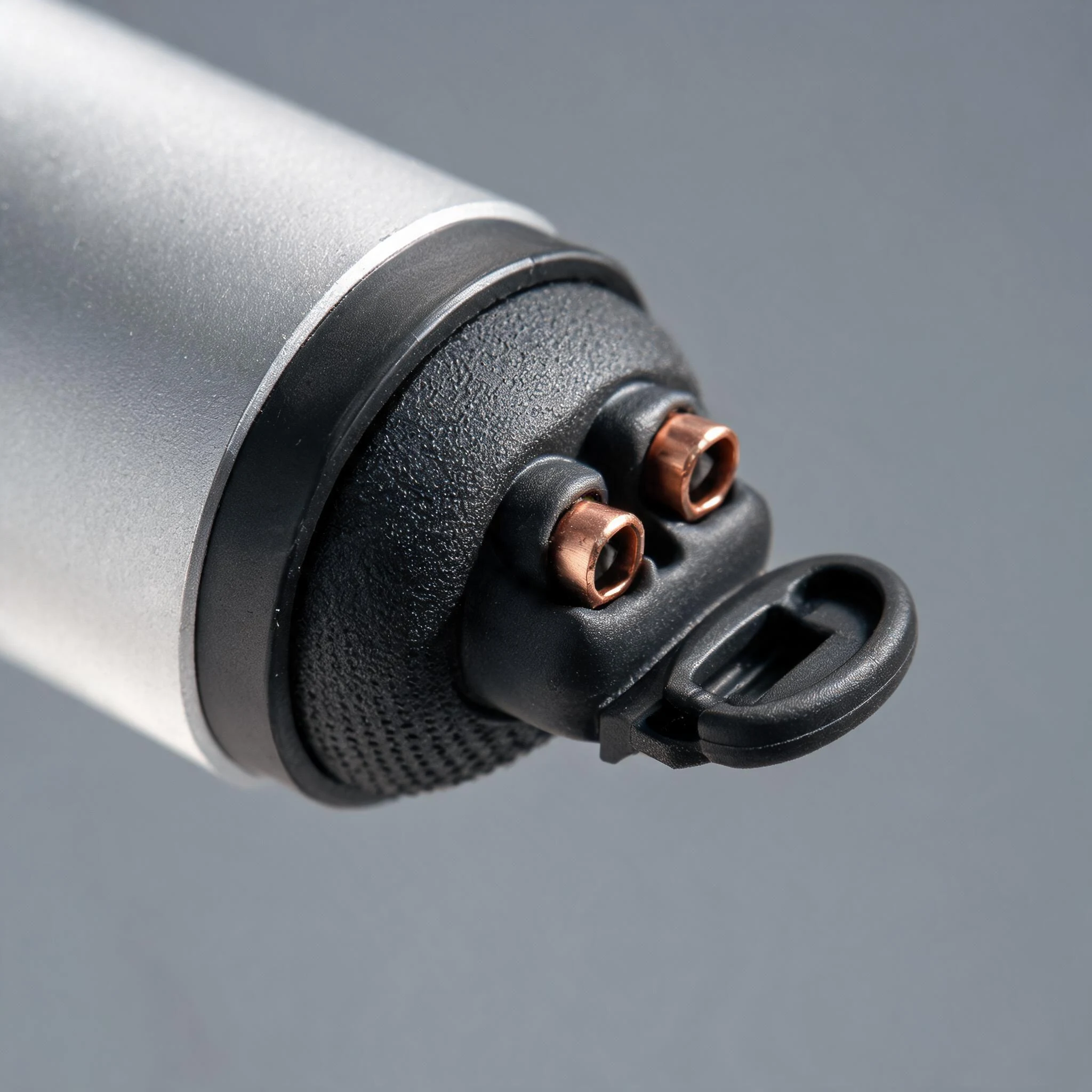
- A thicker lip is not a better lip: too little compression lets water past, too much wrinkles and rolls at the corners and opens a path. Design 15-30% compression, thicker at corners and thinner on straights.
- The terminal root needs structure: a flat contact lets water track along the silicone-to-terminal interface. A boss and groove that the silicone keys into, plus primer, is the repeatable answer.
- Anodising is more than a grade: film thickness and sealing state decide whether the primer grips, and a thick or poorly sealed film often fails only after thermal cycling. For lamp sealing practice, compare our notes on silicone seals in automotive lamps.
In service
Rain, gloves and mud: the tail fails first
Inspection rounds, emergency repair, night fishing and camping - the light is carried one-handed, tucked under an arm or set down on the ground. The tail takes the sweat, rain, mud and knocks.

So acceptance is not a look-and-feel check: grip friction is measured wet and gloved, sealing is checked by immersion or spray on the assembled light, and drop height and surface (concrete, gravel) follow real use. Softness is only the hand feel - lip compression, terminal root structure and aluminium surface preparation decide how long the part lasts.
Before tooling
Three things to settle
Once these three are agreed, the construction and tool for the searchlight tail grip sleeve can be frozen; dimensions and tolerances follow the drawing.
- Tail structure: barrel diameter, tail thread or bayonet, charge port and button positions, and the heat path of the light
- Service environment: rain, dust, cold and glove use, plus the water acceptance requirement for the assembled light
- Terminal connection (solder, spring contact or pin) and the service and cleaning frequency, which decide slide-on versus overmoulding
FAQ
Questions on the tail grip sleeve
Does the sleeve block heat from the lamp?
The sleeve covers only the section the hand holds, away from the hottest head section and the cooling fins. Leave a heat break between the sleeve and the head. On a sealed housing, run a temperature-rise test before fixing the coverage length rather than wrapping the whole barrel.
Is there enough grip with thick gloves?
Texture and hardness have to be set for gloved use: deeper pattern, Shore A 45-55, and a locally thicker grip area. Test the sample dry, wet and gloved - dry-hand approval alone usually ends up slippery in the field.
Slide-on sleeve or overmoulded?
Choose slide-on where cleaning, colour changes or field replacement matter, and get the interference fit and anti-pull feature right. Choose overmoulding where sealing matters more than serviceability, and build the mechanical lock and sealing lip into the structure.
More in metal + silicone
The same interface route applies to stainless steel and zinc-plated parts.
Send the tail structure and the service environment
A tail drawing or sample, the terminal connection and the water requirement are enough for a construction proposal and a sampling plan.