Electric screwdriver grip handle
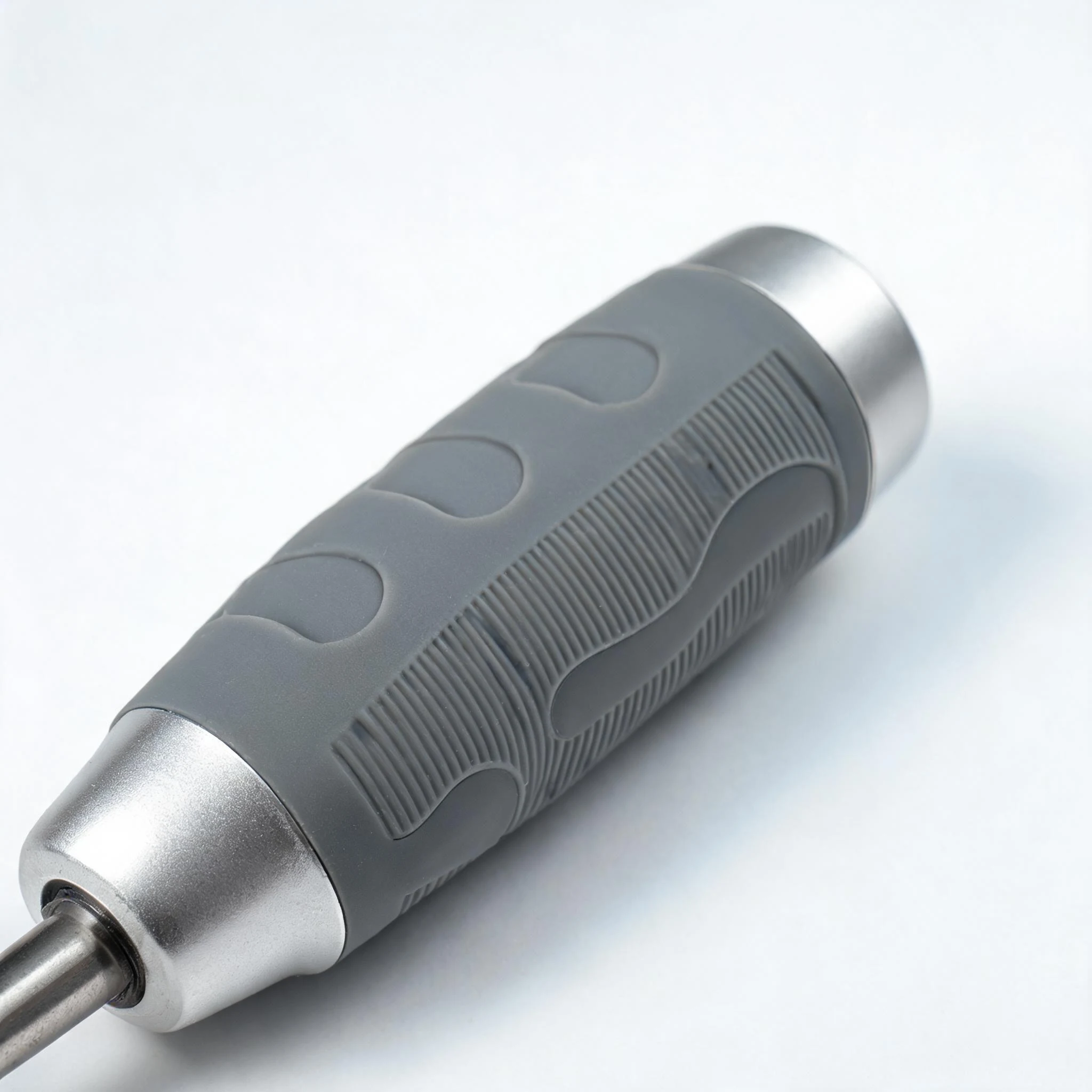
Silicone overmolded onto an aluminium frame: anti-slip, vibration damping, no delamination after long-term hand pressure and repeated flexing. Failures usually come from surface prep and locking, not from the rubber.
Product description
An electric screwdriver grip looks like a sleeve of soft rubber, but it carries three jobs at once: anti-slip when torque is transferred, damping during long shifts, and interface stability after repeated gripping and flexing. Aluminium is light, stiff and conducts heat, but the anodised layer is dense - silicone bonds initially and then lifts from the edge after a few hundred grip cycles.
Two structural routes are normally combined. Mechanical locking uses through-holes, dovetail grooves or a flange so silicone flows through and holds during moulding. Adhesive bonding uses a primer matched to the anodised aluminium, applied after cleaning and blasting. Because the grip takes load, production parts usually lead with locking and use primer as support.
Hardness drives both feel and life. Shore A 35-50 gives an electric screwdriver grip good rebound and noticeable damping; harder compounds dig into the hand over a shift. Wall thickness sits between 1.2 and 2.5 mm, with local thickening at the finger grooves for grip - though too much thickness dulls the pressure feedback.
Structure and material points
- Prepare the aluminium: degrease, blast or alkaline etch before primer; confirm anodising thickness and sealing state first.
- Lock mechanically: through-holes, dovetail grooves and a flange around the frame resist grip cycles and assembly torque.
- Damping follows hardness: Shore A 35-50 balances damping and support; approve the feel on a physical sample.
- Flex fatigue: the middle of the grip sees the highest bending stress, and a local thinning often outlasts a thicker wall.
- Media resistance: machine oil, cutting fluid and sweat age the primer; test against the real routine.
Options
Typical range and process rules
The table shows the usual range for this part family. Dimensions, tolerances and acceptance criteria follow the project drawing; colour and feel are approved on a physical sample.
| Item | Typical range | How it is fixed |
|---|---|---|
| Tool fit | Custom to the housing interface and battery pack, straight and pistol grip | Tool 3D model or physical sample |
| Grip length | 80-140 mm typical, finger grooves sized by hand | Target user hand size and grip position |
| Wall thickness | 1.2-2.5 mm, locally thicker at grooves and tail | Feel and rebound on samples |
| Hardness | Shore A 35-50 typical, higher where more support is needed | Approved on a physical sample |
| Surface | Fine texture, matte, local bumps, two-shot hard-soft zones | Soil retention assessed against the working environment |
| Colour | Solid or two-shot, matched to a colour chip | Colour plaque and sample approval |
| Process | Primer bonding, mechanical locking, or both | Frame structure and assembly method |
| Durability | Grip fatigue, drop, torque transfer, media wipe | Cycle test with real frequency and media |
Before tooling
Three things to settle
The tool and process are frozen once these are agreed; dimensions and tolerances follow the drawing.
- Housing interface, battery pack and switch positions in 3D (they set clearance and openings)
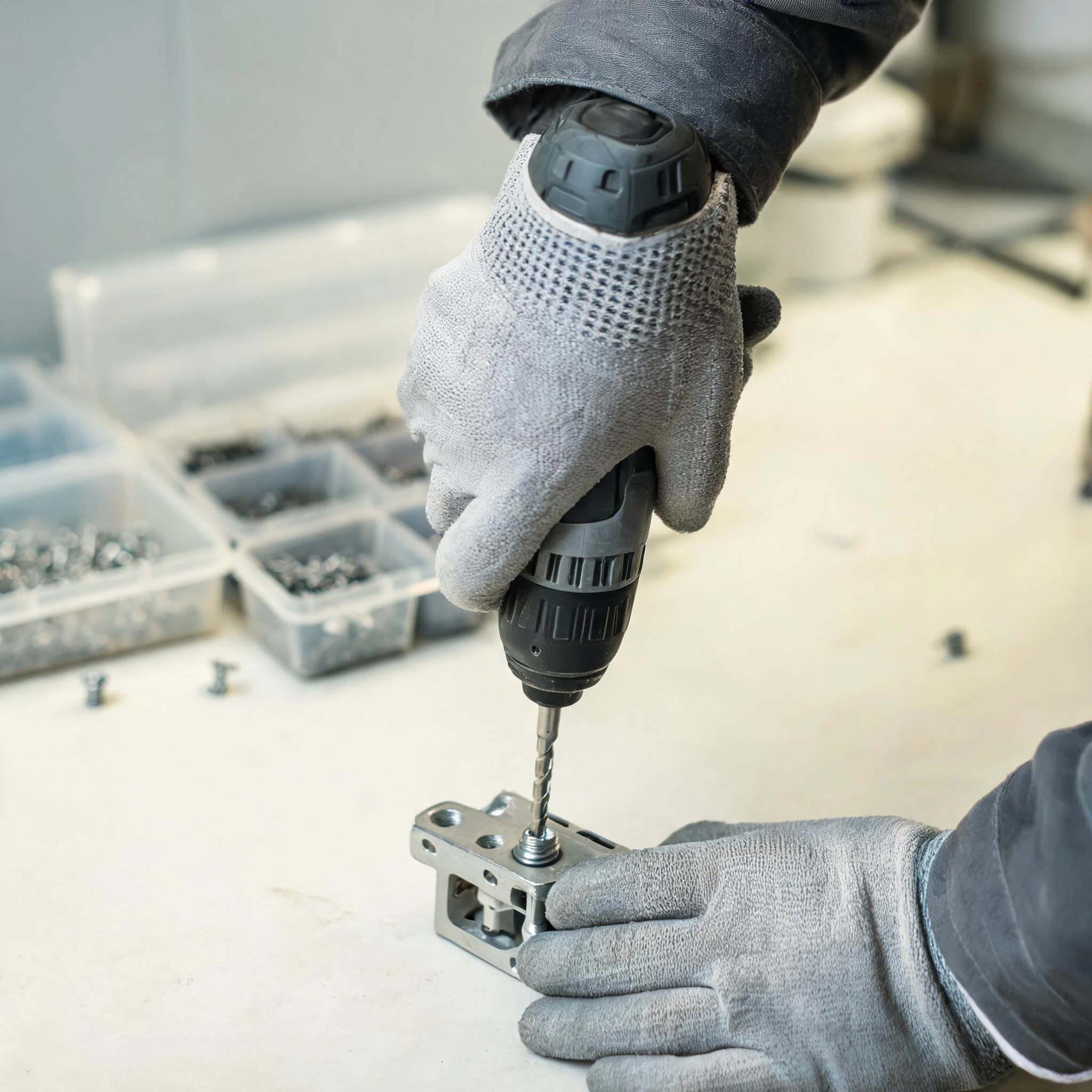
- Hand size, use frequency and whether gloves are worn (they set the texture and hardness split)
- Contact media (oil, cutting fluid, sweat), cleaning method, drop and torque acceptance
FAQ
Questions on the grip handle
Does the grip delaminate after long-term hand pressure?
It depends on three things: aluminium surface preparation, primer match, and whether the structure locks mechanically. A flat bond held only by primer lifts at the edge first; through-holes or dovetail grooves usually last far longer. Run a grip fatigue test during sampling, counted from the real use frequency.
Does a silicone grip make the tool run hotter?
Locally, yes, but the heat sources in an electric screwdriver are the motor and battery pack, not the grip section. Leave a heat path or thin the rubber over the motor instead of thickening the whole grip.
Can the grip be two-shot with hard and soft zones?
Yes. A softer compound at the palm and a harder one at the finger grooves and tail is common, with the parting line kept away from the web of the hand. Yield depends on parting line position and colour bleed control, which are settled at trial moulding.
More in metal + silicone
The same interface route applies to stainless steel and galvanised parts.
Send the tool structure and the working conditions
A housing 3D model, hand size, contact media and annual volume are enough for an interface route and a sampling plan.