One-piece encapsulation
Silicone overmolding covers the PCBA in the cavity; the outer shell and the seal form together, cutting assembly steps and joints.
Precision silicone overmolding · drawing review → sampling → volume
Silicone overmolding · silicone over PCBA
Overmolded PCBA, skin-friendly, continuous tracking
Silicone Overmolding, Continuous Safe Temperature Tracking for Smarter Care
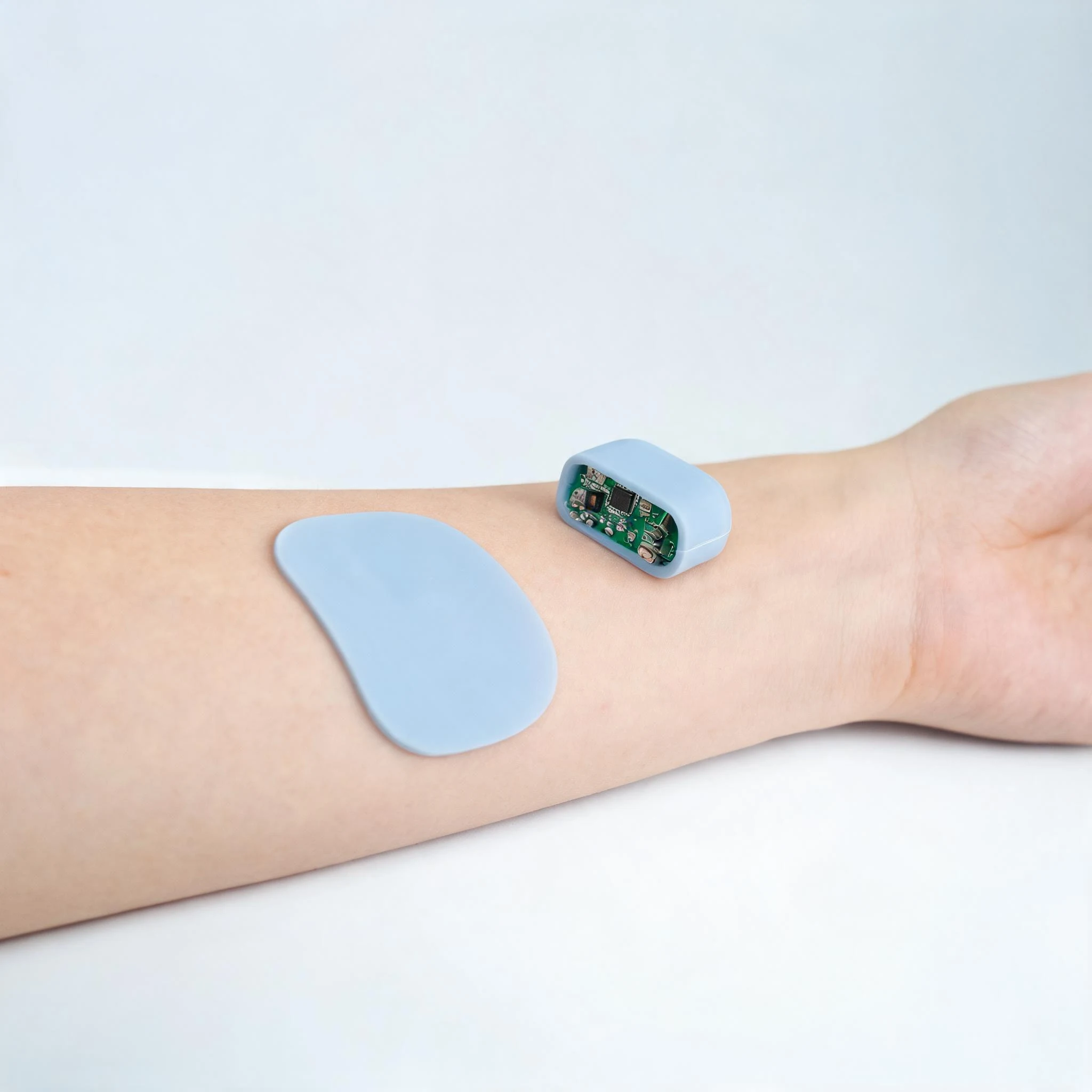
Silicone overmolding wraps the PCBA in one piece, removing the housing and its seams. The soft silicone outer layer sits flat on skin for long-term wear. Mercury-free, replacing glass mercury thermometers.
Process first
The difficulty in a temperature monitor is not the sensor, it is the structure. The conventional build is board plus plastic housing plus gasket: many seams, more thickness. Silicone overmolding wraps the board directly, turning three layers into one.
Silicone overmolding covers the PCBA in the cavity; the outer shell and the seal form together, cutting assembly steps and joints.
A thin silicone wall with rounded edges. No hard corners, no foreign-body feel during long wear.
The overmolded seal keeps sweat out, and the surface can be wiped clean between uses.
Wall thickness and encapsulation completeness decide yield, which depends on venting and the process window. See capabilities.
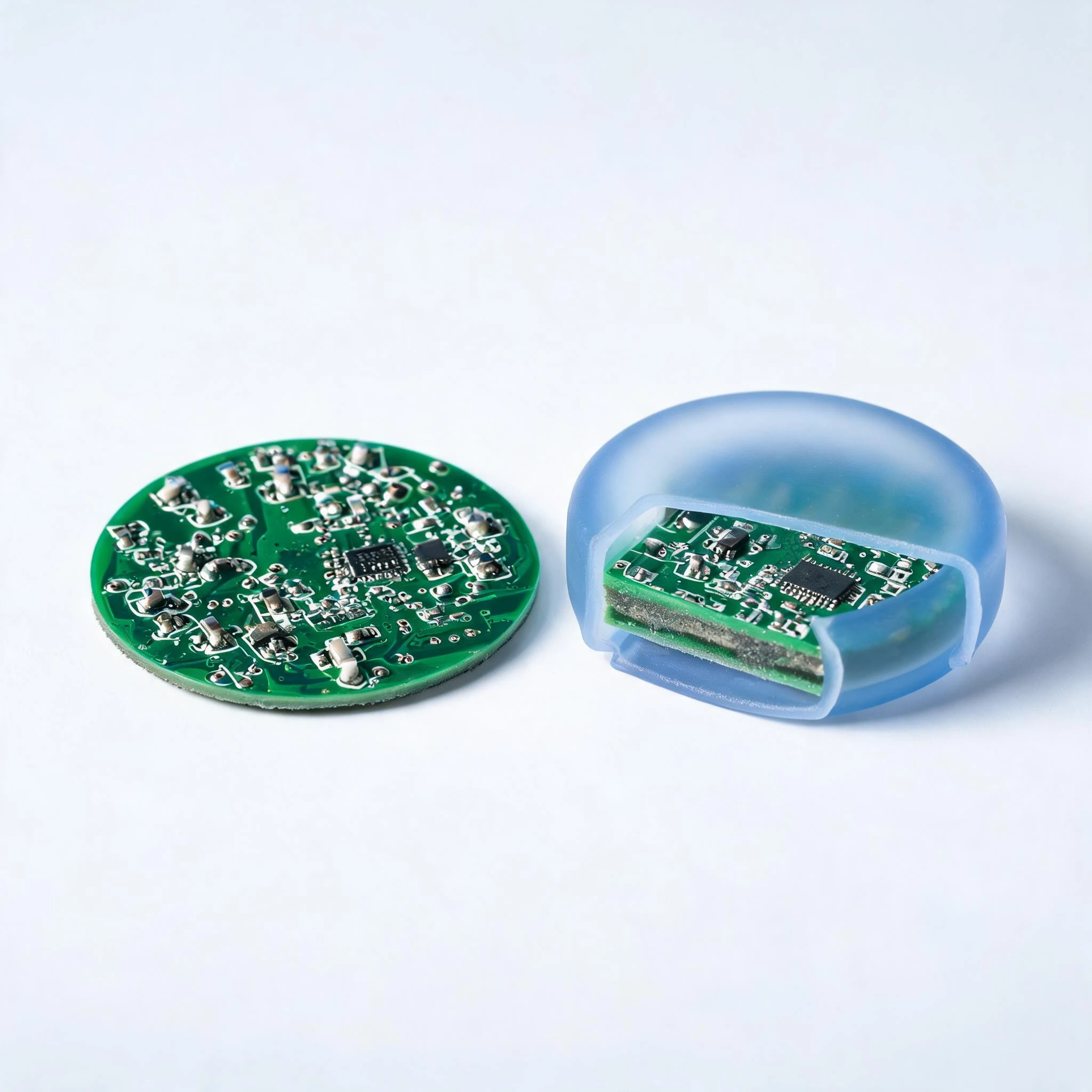
Material and surface feel are project-configurable; selection logic is on materials, and interface validation on testing.
Hardware
Silicone overmolding keeps the hardware thin, and the build serves one goal: staying on the body for long periods. Nothing is added beyond that.
| Item | Description |
|---|---|
| Form | Thin overmolded patch; silicone overmolding fully encapsulates the PCBA |
| Outer material | Soft skin-friendly silicone, colour and hardness configurable |
| Sensing | Built-in temperature sensor with continuous automatic capture |
| Data link | BLE low-energy Bluetooth, paired at short range |
| Wearing | Adheres close to skin; thin structure suits long-term wear |
| Environment | Mercury-free, replacing glass mercury thermometers and their breakage risk |
Dimensions, runtime and ingress rating are confirmed per project specification; measured data is provided at sampling.
Monitoring system
Temperature changes over time. One measurement shows a moment; a curve shows the trend.
The device logs temperature at set intervals, so patients are not woken for repeated checks.
Scattered readings become a curve: onset, peak and settling are visible at a glance.
A threshold breach raises a notice, so attention comes before the next ward round.
Records stay available by time, so a shift handover can look back several days.
Export a temperature report for a period, for handover and clinician review.
BLE carries the data at short range with no extra cabling.
Access and data security
Temperature is medical data. Tiered authorisation is not an add-on; it is the first layer of the design.
Patient, family, nurse and doctor each hold a different view scope, mapped to their role.
Only authorised staff can view records; permission changes and revocations take effect immediately.
Temperature data is encrypted while moving and while stored, reducing exposure risk.
Designed to medical privacy norms and aligned with common HIPAA and GDPR requirements; specific terms follow the deployment region and institutional agreement.
This is an adjunct monitoring tool. It does not diagnose or treat any condition and does not replace clinical judgement.
What sets it apart
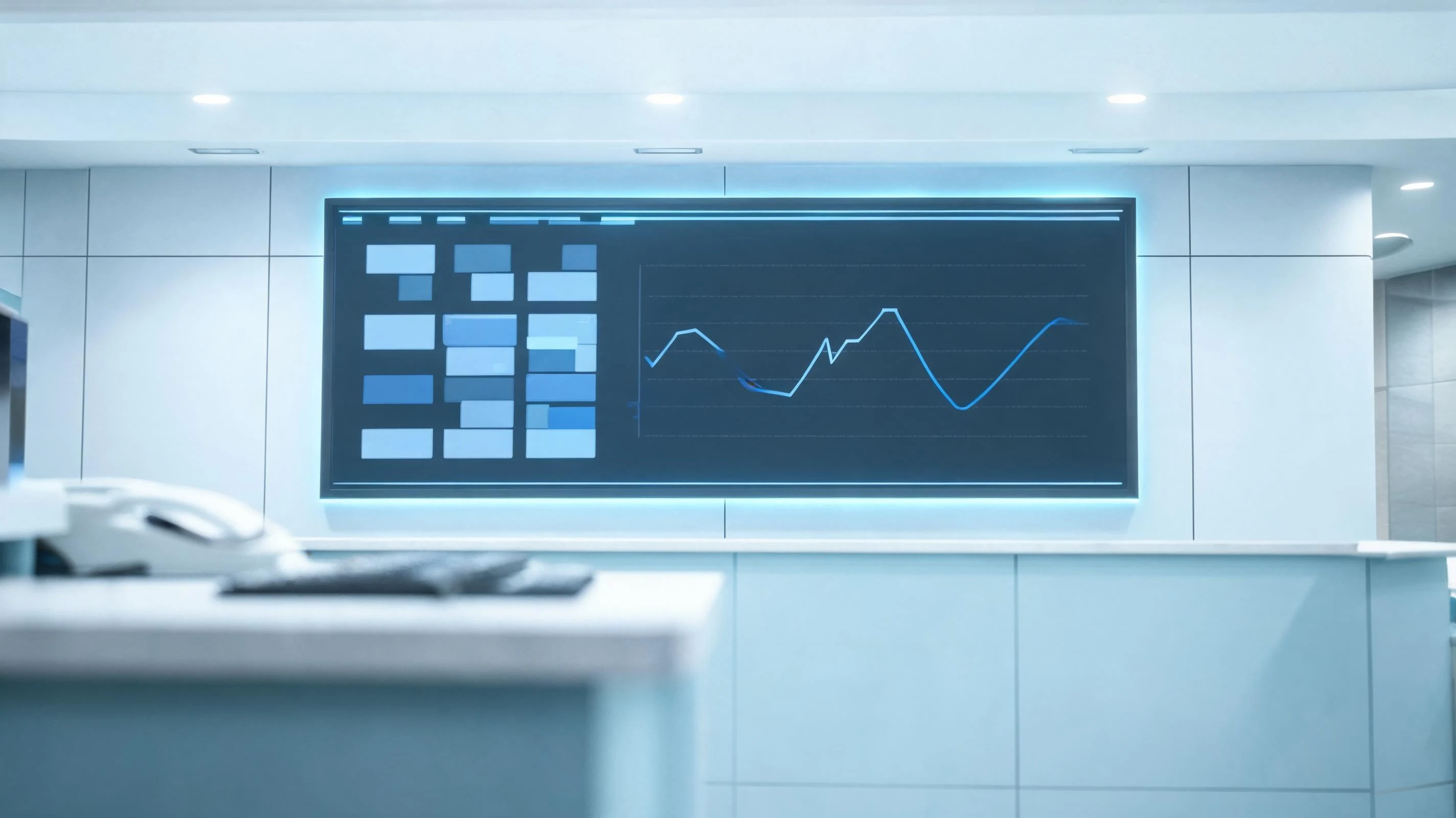
Temperature data syncs to the nursing dashboard. The system reorders review priority and triage sequence against risk thresholds, so the febrile or fast-rising patient is seen first.
Triage logic is configurable; thresholds and priority rules are set by the institution.
Where it fits
Not every setting needs continuous monitoring. These share two traits: single readings are not enough, and staffing is limited.
| Setting | Need | What overmolding adds |
|---|---|---|
| Inpatient wards | Night-time swings, handover gaps | A curve replaces scheduled waking; handover has evidence |
| Fever clinics | High volume, fast triage needed | Risk-based ordering on the dashboard eases manual triage |
| Paediatrics | Low cooperation, frequent checks are hard | Thin and skin-friendly, no repeated disturbance |
| Care and rehab homes | Long-term care, tight staffing | Automatic capture and alerts reduce rounds |
| Home monitoring | Family wants remote visibility | Tiered authorisation for family, less anxiety |
| Quarantine and isolation sites | Many people, early detection | One dashboard view, immediate exception notices |
FAQ
No. Sensor position and silicone wall thickness are calculated together at design stage; the overmold is the outer layer and seal, not an obstruction. Sample-stage comparison testing is provided.
The outer layer is soft skin-friendly silicone with rounded edges, and the thin build suits long wear. Wear duration and replacement intervals follow institutional policy.
Access is role-based: patient, family, nurse and doctor each hold a different scope. Unauthorised users cannot view records.
No. It is an adjunct monitoring tool providing continuous temperature and risk prompts. It makes no diagnostic or treatment claim; diagnosis and treatment remain with the clinician.
A plastic housing needs seams and a gasket, adding thickness and ingress risk. Silicone overmolding wraps the board in one piece: thinner, fewer joints, better for long skin contact.
The surface can be wiped clean. Disinfection method and frequency follow the facility's infection-control policy; avoid prolonged soaking and aggressive solvents.
Temperature reports and historical curves can be exported by period for handover, charting and clinician review.
OEM and ODM supported: structure design for silicone over PCBA, material selection, tooling and volume delivery. Samples and a spec sheet are available.