Cookware pan handle
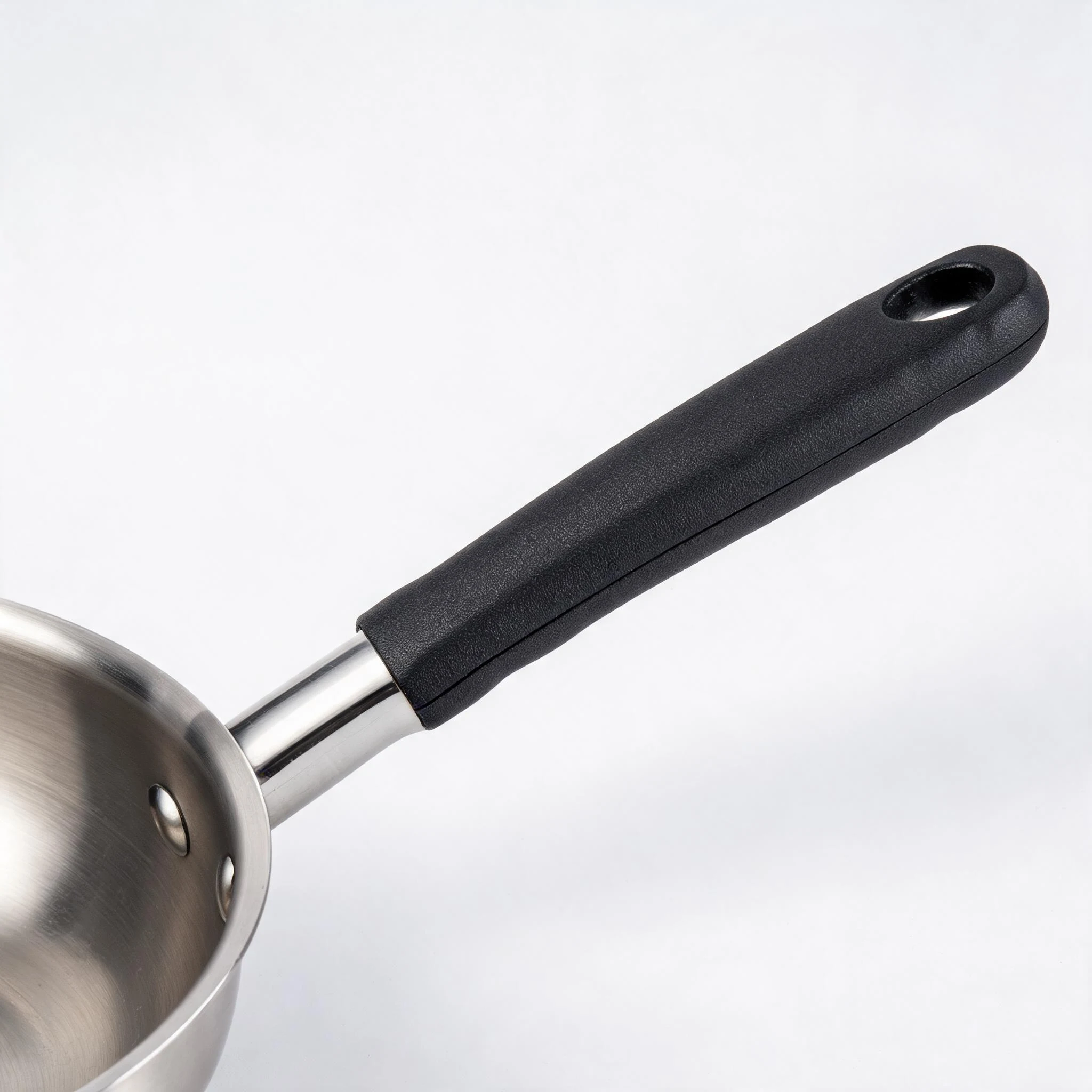
A silicone sleeve over a stainless steel or cast iron handle: an insulated, non-slip grip that holds with wet or oily hands and survives repeated dishwasher cycles.
Product description
A pan handle lives with three things at once: heat, oil and water, and repeated gripping. Metal conducts fast and stays hot at the table; a plastic handle deforms or cracks after enough time beside a burner. Silicone over metal splits the job: the metal carries the structure, the silicone takes the feel and the heat path.
Three constructions are common. A slide-on sleeve is a separate silicone part held by interference fit, removable for cleaning and available in different colours at lower tooling cost. Overmoulding forms the silicone directly on the handle, with mechanical locking and primer at the interface, for better sealing and anti-rotation. Two-piece clamshell wrapping suits irregular sections and structures that need clamping. They differ in sealing, anti-rotation and serviceability.
Heat is where expectations usually go wrong. Silicone conducts little, but a thin layer cannot stop a steady heat flow. What decides whether the handle feels hot is the distance from the pan, the wall thickness (including any air gap) and the section of the handle itself. Keep the sleeve away from direct flame and radiant heat, and leave bare metal next to the pan: it radiates heat and shows at a glance that this part is hot.
A handle takes torque and pull. A sleeve resists rotation through interference fit and section shape (oval, D-shaped, ribbed); an overmoulded part adds holes, flanges or undercut grooves so the silicone keys into the metal. A plain round handle held by friction alone will rotate with use, and the movement shows up as a wear line at the rivet.
The dishwasher tests the interface and the end cap together: hot water, detergent and a long soak. The end must be closed - a silicone end cap or a rolled edge over the handle end - otherwise water enters the interface from the end face and the bond lifts after a few cycles. Validate with the real wash programme and an agreed cycle count, not against a material temperature table.
Structure and material points
- Coverage: leave 20-40 mm of bare metal near the pan, set by pan type and heat source; avoid direct flame and radiant heat.
- Metal surface: blast or passivate stainless steel; blast cast iron and add a transition primer; remove oil and polishing wax first.
- Mechanical locking: holes, flanges or undercut grooves let silicone key in against torque and pull.
- Anti-rotation: an oval, D-shaped or ribbed section holds far better than a plain round one.
- Closed end: an end cap or rolled edge keeps dishwasher water out of the interface.
- Windows: rivets and hanging holes need thicker, radiused edges or tears start at the hole.
Options
Range and process rules
Typical range for this product family. Dimensions, tolerances and acceptance criteria follow the drawing; grip feel and assembly force are approved on a physical sample.
| Item | Range | How it is fixed |
|---|---|---|
| Pan fit | Single handles for woks, frying pans, saucepans and milk pans; round, oval or irregular sections | Handle drawing or a physical sample |
| Construction | Slide-on sleeve, overmoulded, or two-piece clamshell | Sealing, anti-rotation and serviceability |
| Coverage length | Set by the grip area, leaving 20-40 mm of bare metal near the pan | Measured handle temperature and grip posture |
| Wall thickness | 2-5 mm, locally thicker at the grip | Grip and heat feel on samples |
| Hardness | Shore A 40-70, typically 50-65 at the grip | Approved on a physical sample |
| Surface | Fine grit, longitudinal grooves, diamond, gloss | Wet and oily friction measured on samples |
| Colour | Black standard; colour matching available | Colour plaque and sample approval |
| Retention | Interference fit, snap feature, rivet window, overmould lock | Anti-rotation and pull-off requirement |
| End | Silicone end cap, rolled edge or open end | Dishwasher frequency and cleaning method |
| Verification | Thermal cycling, dishwasher cycles, pull-off and torque, drop, salt spray on metal | Cycle counts agreed for the real heat source and wash programme |
Detail
Three things that go wrong
None of these show up on the inspection bench; they come back as returns after a few months of use.
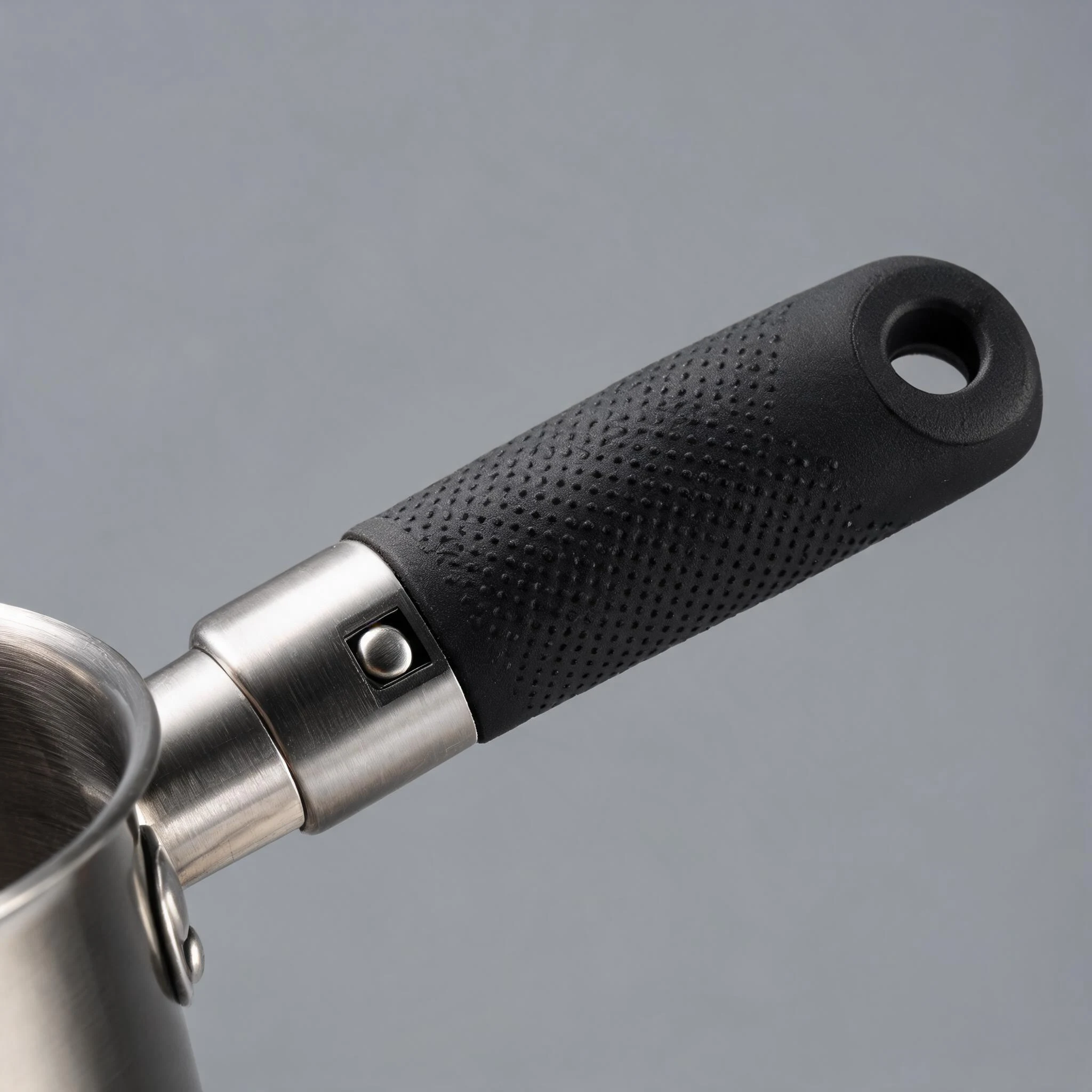
- Heat break: wrapping all the way to the pan looks complete, but it traps the hottest section inside silicone, which hardens, cracks and discolours within months. Leaving bare metal works better than adding thickness.
- Open end: water enters the interface from the end face and the bond lifts after a few dishwasher cycles. The end cap is part of the seal, not decoration.
- Window edges: rivet and hanging holes concentrate stress. Thicken and radius the window; sleeves punched straight through tear from the hole.
In service
Wet hands, oil and the dishwasher, three times a day
Home kitchens, restaurant lines and campsites: the handle takes oil, water, detergent and a repeated lifting motion.
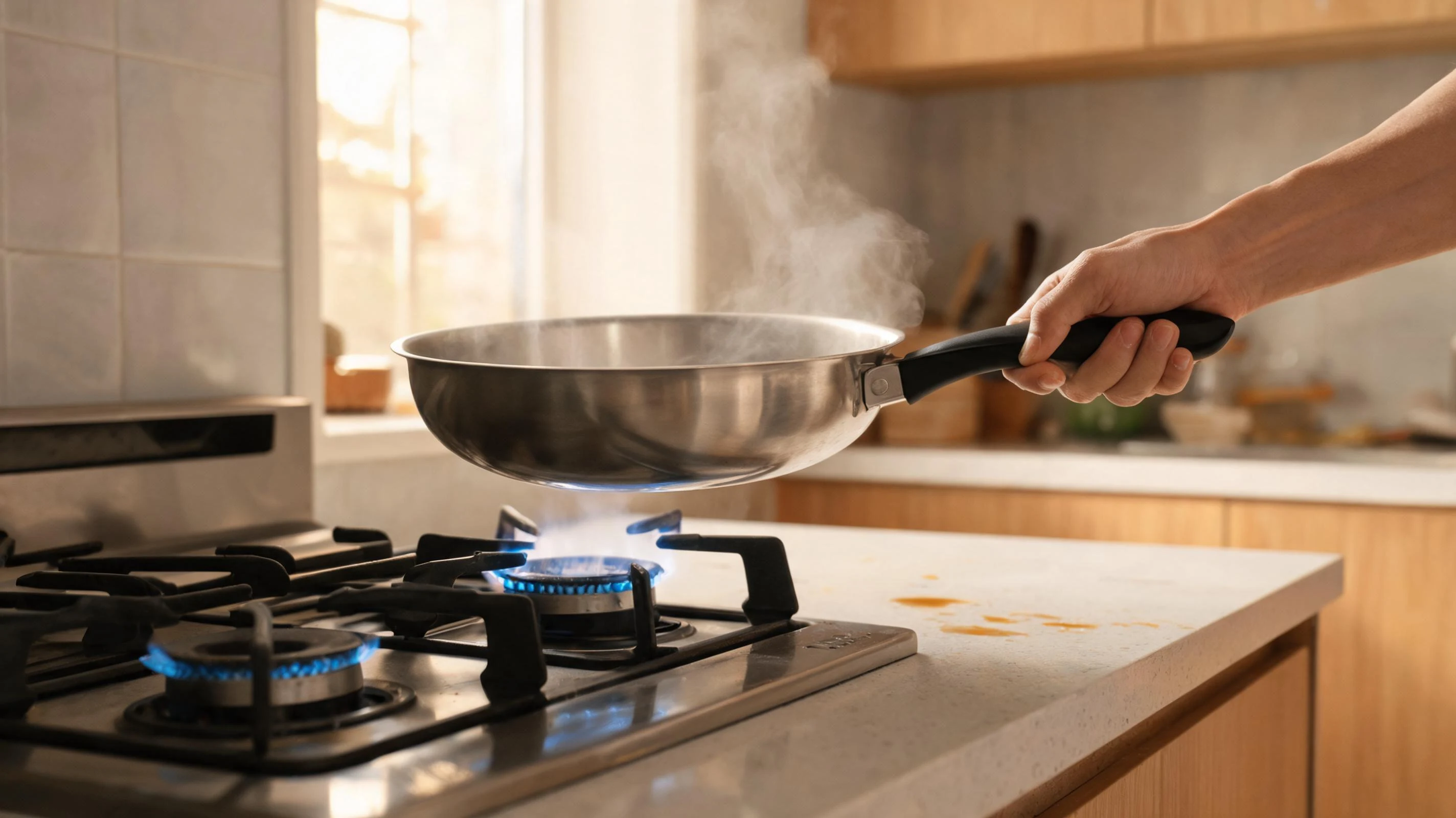
So acceptance is not a look-and-feel check: grip friction is measured wet and oily, insulation is verified with the real heat source through handle temperature and thermal cycling, the dishwasher runs the real programme for an agreed number of cycles, and anti-rotation is checked by torque. Softness is only the hand feel - coverage distance, a closed end and window structure decide how long the part lasts.
Before tooling
Three things to settle
The tool and process freeze once these are agreed; dimensions and tolerances follow the drawing.
- Pan type and handle section: round, oval or irregular, with dimensions and taper, plus rivet and hanging hole positions
- Heat source (gas, induction, oven) and measured handle temperature, plus dishwasher frequency
- Pan weight and lifting posture, which set coverage length, wall thickness and anti-rotation structure
FAQ
Questions on the pan handle
Does silicone make the handle completely cool?
No. It slows heat transfer and gives the hand time to react, but a steady heat flow still comes through. Keeping distance from the pan and controlling thickness works better than adding material; use a mitt for long lifts.
Is it dishwasher safe?
It can run the programme, but it depends on whether the end is closed and whether the primer resists hydrolysis. Validate with the real wash programme and an agreed cycle count rather than a single temperature rating.
Will it rotate over time?
A round handle held only by interference will rotate under repeated torque. Choose an oval or ribbed section, or lock mechanically into the metal, and keep the rivet area in a window so stress does not concentrate at the hole.
More in metal + silicone
The same interface route applies to aluminium and zinc-plated parts.
Send the pan, the handle section and the heat source
A handle drawing or sample, the heat source and the dishwasher frequency are enough for a construction proposal and a sampling plan.