This detective series has covered gifting, shelves, teardowns, trade shows, production lines and negative reviews. This one takes a setting that rarely gets discussed: ageing-in-place home adaptation.
The clues come from three places: reviews on ageing-care products, the snag list in home adaptation projects, and procurement sheets from care facilities. The pattern is consistent — what people actually complain about is rarely the function. It is "it digs into my hand", "the mat slides", "I cannot unscrew the lid". Those are exactly the places silicone can help and rarely does well.
Six products follow, each with what it does, why silicone, and where the value sits.
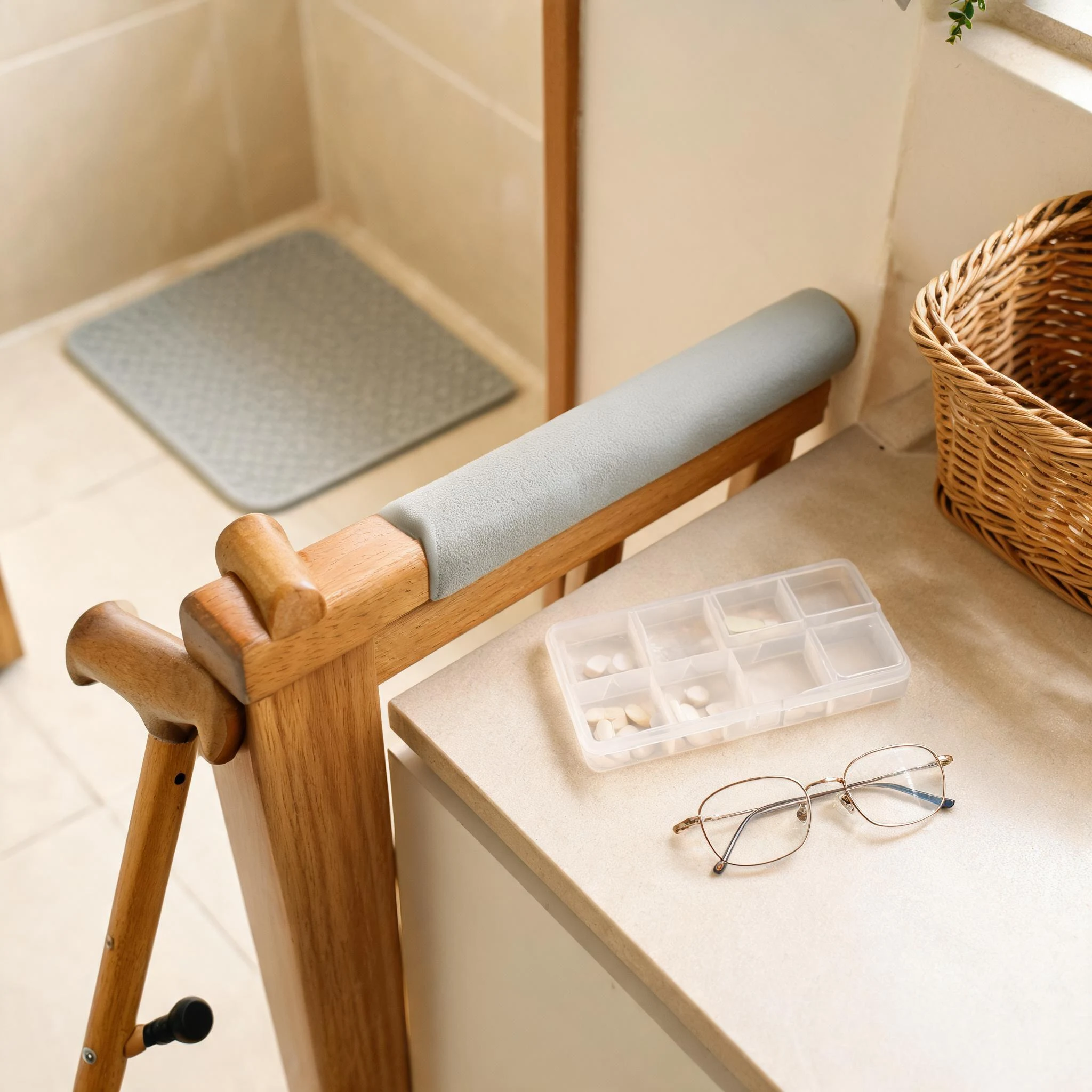
1. Grip wraps for handrails and handles
What it does: wraps wooden handrails, door handles and drawer pulls to add friction, remove hard edges and stop the cold shock in winter.
Why silicone: feel and rebound are its strengths (see the properties library); 40–50 Shore A holds both grip and give. It does not crush like EVA, and does not harden in winter like PVC.
Value: a standard line item in home adaptation, bought by the running metre. Low unit value, steady repeat volume. The barrier is installation — it must clip onto existing rails without dismantling anything, which makes structure the competitive point.
2. Ferrules for canes and walkers
What it does: sits at the base of canes, quad canes and walkers for grip and damping.
Why silicone: abrasion and tear resistance are the demands, so higher-hardness silicone or a silicone-TPU composite; tread patterns help drainage and grip, and low-temperature flexibility matters in cold markets.
Value: a consumable replaced every three to six months — low price, reliable repeat purchase. Care facilities buy in volume, and their demand for consistency and packaging discipline actually makes them easier than retail.
3. Bathroom mats and edge trims
What it does: shower floors, beside the tub, step edges: grip without a cold feel.
Why silicone: in permanently wet conditions it resists mould and odour, which is the core difference from PVC and rubber; suction cups or dead weight keep it in place.
Value: demand is clear, but returns and bad reviews cluster on "goes mouldy", "curls at the edges", "won't stick". Whoever solves those three opens a real gap — and that is where differentiation lives.
4. Seals for pill organisers
What it does: lid seals and desiccant-compartment gaskets that keep moisture and odour out.
Why silicone: repeated opening needs compression recovery, and silicone has low compression set; food-contact grades make the safety story easier.
Value: organisers with reminders are growing, which turns the seal into part of overall reliability. Low unit price, but once designed in, switching cost is high — a sticky component.
5. Table mats and bowl bases
What it does: sticks to the table or tray so one-handed eating does not tip the bowl; a silicone ring under the base adds friction.
Why silicone: food-contact, dishwasher-safe and able to re-seal repeatedly; its temperature range and lack of odour are easier to defend than TPR.
Value: sold into home care and facility dining, where buyers look at dishwasher endurance and how long suction lasts. The competition is not the material but the suction geometry and cleanability.
6. Wearable parts for monitoring devices
What it does: straps and patch shells for fall detection, heart-rate and temperature monitoring, worn against skin for long periods.
Why silicone: skin-friendly, low-allergen and sweat-resistant; silicone overmolding over PCBA wraps the board (process: overmolding) in one piece, thinner and with fewer seams.
Value: the fastest-growing of the six. The core problem in ageing-care devices is whether the wearer keeps it on, and comfort decides data completeness — so the silicone part moves from accessory to critical component.
Detective notes: three judgements
- Money goes to preventing one accident, not to better specs: reviews almost never mention hardness; they mention slipping, rattling and cold surfaces.
- Installation beats material: products that clip onto existing fittings sell far better. Structure is the real barrier.
- Consumables are good business: ferrules, seals and grip strips are cheap but repeat, which suits long-tail customers.
Four traps for a factory entering this
- Scaling up a household product without accounting for weaker grip strength;
- Chasing appearance while skipping mould and wash testing — bad reviews arrive later;
- Designing suction without a vent path, so it stops holding after a few uses;
- Packaging and instructions without large type or diagrams, which drives returns.
Conclusion
Ageing-in-place is not a charity market; it is a segment that demands more from structural detail and reliability. Silicone's role here is concrete: soften hard surfaces, make slippery things grip, and turn failure-prone spots into replaceable parts.
Next time you read product reviews, scan only the verbs in the negative ones — slips, sticks, digs in, goes mouldy. Those four words sketch the next generation of products.
If you are developing ageing-care products or wearable monitors, send the concept or drawing (tooling and sampling) and we will start with a feasibility check on structure and material.