Wearable ECG patch sensor
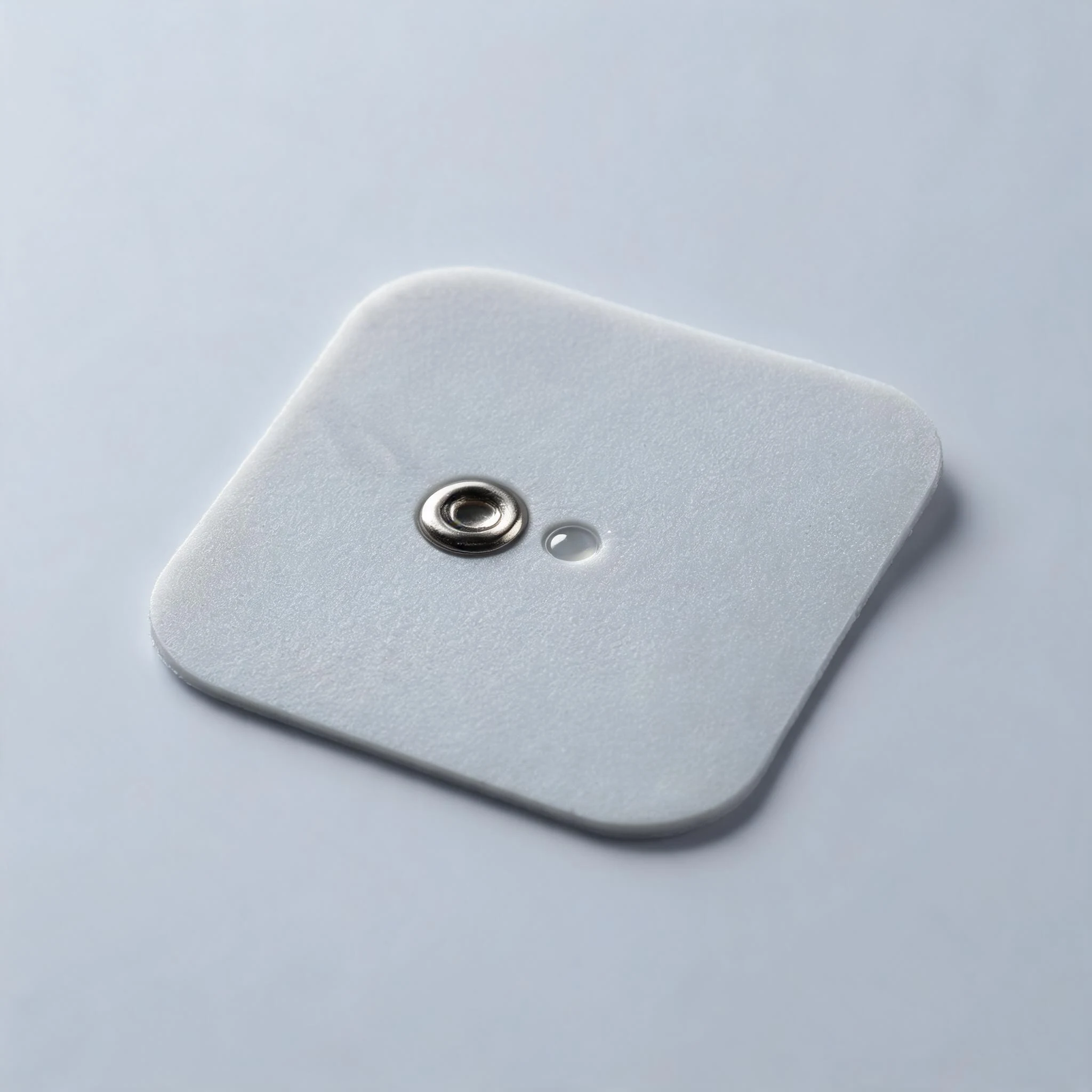
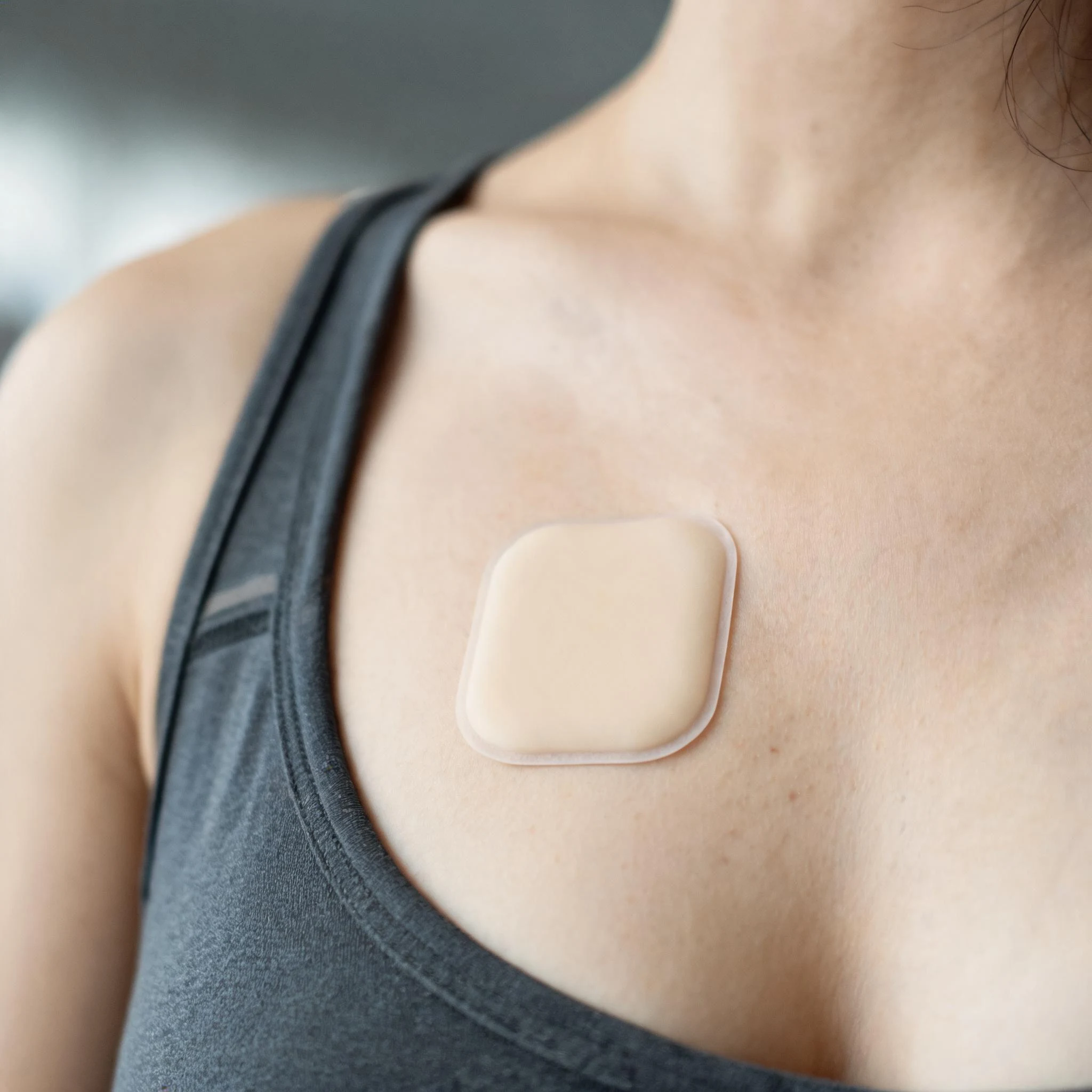
A patch worn on the chest for three to seven days, built around a board, a coin cell and a few dome switches. Full encapsulation keeps sweat, shower water and drops out — and keeps heat and moisture in. Balancing those four jobs is the whole design.
Product description
The device is a single-lead ECG recorder: Holter monitoring, event recording, post-operative and home monitoring, sports heart rate. Single-use versions pair with a hydrogel electrode and are thrown away after use; reusable versions use a strap or medical tape, so the housing has to survive repeated wiping and disinfection. The two routes differ in housing structure, compound and validation list, but share one requirement: the board inside has to survive the full product life.
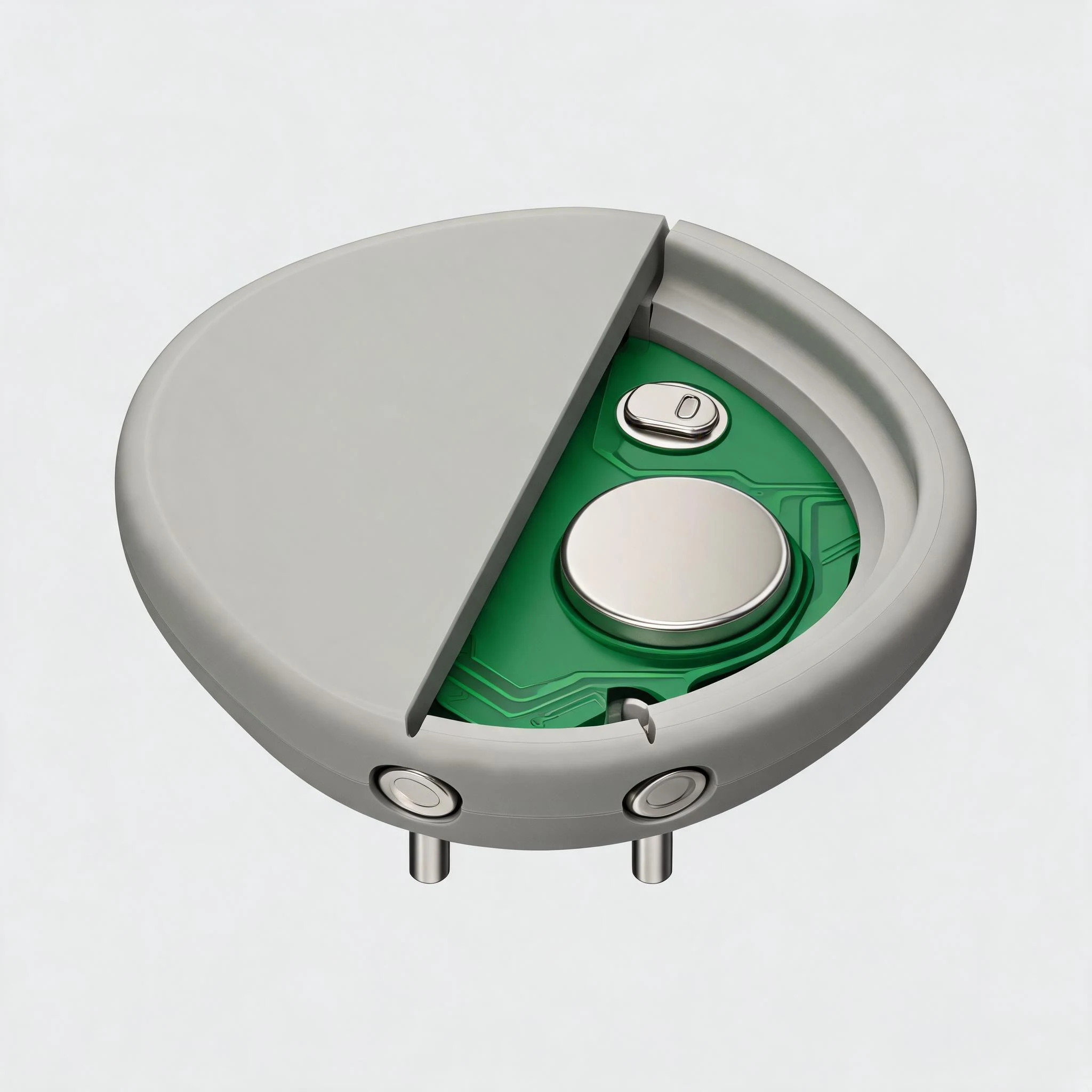
Full or partial encapsulation is the first decision. Full encapsulation moulds the PCBA, cell and switches inside one silicone body: sweat has no path in, the part does not come apart when dropped, and the outside is clean with no parting line. The price is that it cannot be opened or repaired, and heat and moisture are held inside. Partial encapsulation uses a silicone housing with a rigid or bonded lid, which can be serviced and can take a replaceable cell, at the cost of one more sealing interface. Service strategy and product life decide this, not unit cost.
Temperature and stress are the two gates in molding. Silicone needs heat to cure; cells and some components do not want it. Raising the mould temperature to shorten the cycle shows up months later as capacity spread and consistency loss. A low-temperature curing system (mould at 80-110 degrees C) with a longer hold suits these parts better, and the cavity and cell temperatures are measured with thermocouples — not read off the machine setpoint. On the pressure side, fill velocity drags components: uniform thin walls, radiused transitions, zoned evacuation and low injection speed are done together, which is what brings stress at joints and 0402 parts down.
Permeability is where this part is most often misjudged. Silicone is not a vapour barrier; compared with epoxy and most polyurethanes its moisture vapour transmission is higher. On the skin side that is an advantage — sweat vapour escapes and the patch does not feel clammy — but inside it is a risk: vapour gets in and stays in, condensing on the cold face as the day cools. So "fully encapsulated" does not mean waterproof and moisture-proof: liquid water is kept out, while internal vapour still needs conformal coating, local potting, a dry structure or a breathable membrane. Validate in two separate groups — immersion, and damp heat with thermal cycling — and require both.
On the skin side the material and the edge do the work. Medical-grade platinum-cured compound, no talc, low migration; skin irritation and sensitisation assessed to ISO 10993 for the target market; edges radiused R1 or more so continuous wear does not leave a mark; reusable models checked for appearance and function after the number of alcohol wipes in the customer's cleaning protocol, with that number written into the validation list.
The cell and the switches decide how the patch feels to use. Coin cells (CR2032, CR1632) or thin-film cells both work; the battery well needs room to swell and must not take pressure during molding, and power is taken either by welded nickel tabs or spring contacts depending on the cell. The silicone over a dome switch is commonly 0.4-0.8 mm at Shore A 40-60, with travel measured as a force curve at sampling rather than judged by hand. Because the part cannot be opened, the cell's cycle life is the ceiling on product life.
There are two electrode interfaces. A metal snap (stainless steel or nickel-plated) passes through the housing, sealed by an O-ring at its root plus structural compression, and accepts standard lead wires. A conductive silicone electrode keeps the contact flat and removes metal from the skin, but volume resistance, contact area and ageing in sweat have to be controlled together. The indicator light uses clear silicone overmoulded a second time or a light guide; the window is built into the tool, not cut afterwards.
Structure and process points
- Wall zoning: 0.3-0.8 mm in the thin areas, 1.0-1.5 mm over the battery well, with a gradual transition to avoid sinks and uneven rebound.
- Hardness: Shore A 30-40 for the housing, 40-60 over the keys, with a transition zone where they meet.
- Molding: low-temperature LSR (mould 80-110 degrees C) with a longer hold; cavity and cell temperatures measured.
- Stress: low injection speed, zoned evacuation, radiused transitions, relief cavities over tall parts and connectors.
- Internal protection: conformal coating or local potting, designed together with the vapour path through the wall.
- Battery well: room to swell, no direct pressure; welded tabs or spring contacts chosen with the cell.
- Keys: 0.4-0.8 mm of silicone, force curve measured at sampling, then held by the same parameters and mould maintenance interval.
- Electrode: snap with an O-ring seal, or conductive silicone; the opening decides the sealing route.
- Skin side: medical-grade platinum cure, no talc, low migration; edges R1 or more.
- Cleanliness: no silicone release agent in the tool, and no assembly straight after molding without cleaning.
Options
Wearable ECG patch: typical range
The table shows the usual range for this product type. Dimensions, tolerances and acceptance criteria are confirmed from the project drawing; biocompatibility, cleaning and battery transport items follow the target market and the finished device.
| Item | Typical range | How it is fixed |
|---|---|---|
| Format | Single-use patch, reusable patch, chest-strap module | From wear method and service strategy |
| Footprint | About 40 x 30 to 80 x 60 mm, 6-14 mm thick | After the cell and board stack are laid out |
| Wall | 0.3-0.8 mm thin areas; 1.0-1.5 mm over the battery well | Confirmed on a sectioned sample |
| Hardness | Shore A 30-60 (housing 30-40, keys 40-60) | Sampled against feel and force curve |
| Compound | Medical-grade platinum-cured LSR; low-migration and high-tear options | From target market and wear duration |
| Encapsulation | Full, partial with a rigid lid, or silicone housing with pressure-sensitive adhesive | From serviceability and volume |
| Electrode | Snap (stainless, nickel-plated), conductive silicone, external lead | From lead configuration and device interface |
| Battery | CR2032, CR1632, thin-film cell; not replaceable in a full encapsulation | From runtime and thickness budget |
| Keys and light | Dome switch, clear silicone window, light guide | From travel and brightness requirement |
| Ingress | IPX7 (1 m / 30 min), sweat and alcohol wiping; autoclave not claimed | Validated to the device cleaning protocol |
| Temperature | -20 to 60 degrees C on the skin side; -20 to 45 degrees C in storage | From use and transport conditions |
| Validation | Immersion, damp heat with thermal cycling, drop, key life, skin irritation and sensitisation, wipe disinfection, adhesion | Agreed from drawing and regulatory list |
Structure detail
Four ways this part goes wrong
None of them show up on a prototype; they appear after the first users have worn the patch for a week, or after the first shower.
- Treating full encapsulation as waterproof and moisture-proof: liquid water is out, vapour is still moving; without internal protection, condensation corrodes joints months later and there is no water to find.
- Raising mould temperature to win cycle time: the cell is heated repeatedly and loses capacity and consistency; low-temperature cure with a longer hold is steadier, at the cost of more tool capacity and a re-planned cycle.
- Designing the battery well as a tight fit: no room to swell means a bulging housing and stiff keys after charge and thermal cycling, until the force curve fails.
- Silicone too thick over the keys: the feel goes dull and travel is eaten; measure the force curve first, then set thickness and hardness — the other order means repeated trials.
In use
A week on the skin: validate the real wear
Sweat, wiping, rolling over in sleep, wearing it or taking it off for a shower — that is the real duty of this patch, and one immersion test does not describe it.
Three groups of conditions cover it. First, immersion (IPX7, 1 m / 30 min) with no water inside the housing. Second, 48 hours at 65 degrees C and 90% RH followed by ten cycles between -20 and 60 degrees C, then function and appearance — this group is what catches permeability and condensation. Third, simulated wear: artificial sweat immersion and wiping, repeated application and removal, and for reusable models the number of wipes in the cleaning protocol. Add a 1.2 m six-face drop and a key-life test and most of the field failures for this part are covered.
Before tooling
Three things to settle in assessment
Once these are fixed, the encapsulation route, compound and tool plan can be frozen; dimensions and tolerances follow the project drawing.
- Board thickness, cell model and position, key and light-window positions: they set wall zoning, tool slides and the openings.
- Wear method (single-use or reusable), cleaning and disinfection protocol, target-market regulation: they set compound, internal protection and the validation list.
- Annual volume and whether service is required: they set full or partial encapsulation, the number of tools and the test stations downstream.
Common questions
Wearable ECG patch questions
Can an encapsulated patch be worn in the shower?
Immersion to IPX7 is not the issue; hot water with soap is a different set of conditions for the seal and the skin-side adhesive, so validate against the cleaning protocol of the finished device rather than one immersion test. For a reusable model, also confirm how the strap or medical tape holds once wet.
Why is there condensation inside the patch?
Silicone is permeable to vapour. Moisture moves in from the skin side and condenses on the cold face during day-night cycling, which is why full encapsulation is not the same as moisture protection. Conformal coating, local potting or a dry structure inside the housing is what manages it; a thicker wall does not.
Is the battery replaceable?
Not in a fully encapsulated part: battery life sets the product life, which is why patches of this type are usually single-use or replaced on a cycle. A replaceable cell needs a partial encapsulation or a battery lid, and that has to be decided at design stage.
Does the electrode have to be a metal snap?
No. A snap is mature and accepts standard lead wires; a conductive silicone electrode sits flatter and removes metal from the skin, but volume resistance, contact area and ageing in sweat all have to be controlled. The two routes place different demands on the housing opening and the seal.
Other parts in this group and related reading
Four parts make up the PCBA + silicone group; this is the only one that carries both a cell and keys, and the encapsulation logic is shared with the other three.
Send the stack-up, the cell and the wear method
Board thickness and tallest components, cell model and position, wear method and cleaning protocol, target-market regulation and volume: we come back with the encapsulation route and wall zoning first, then sampling.